
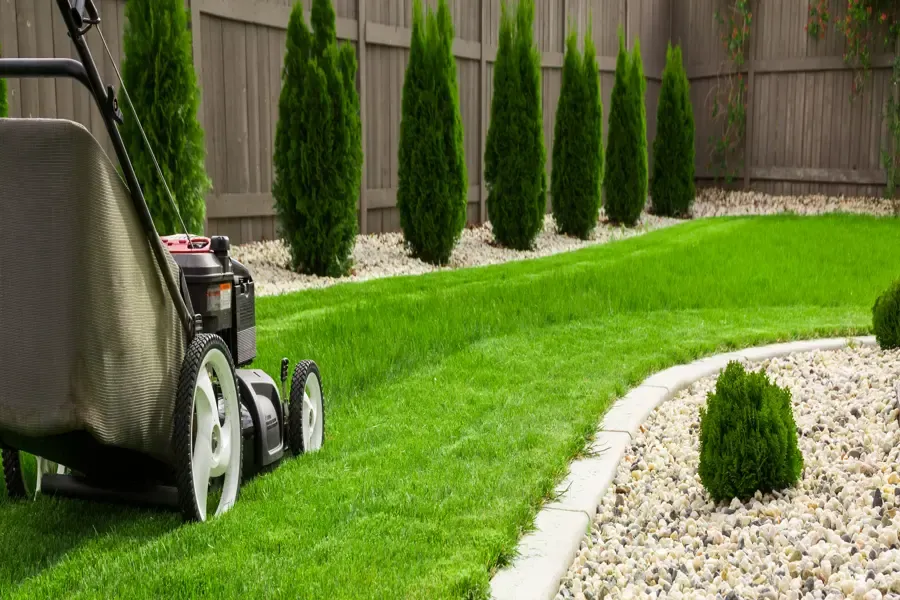
Set irrigation to 1 inch per week — adjust for rain
The "1 inch per week" rule is correct — but most homeowners apply it wrong. Too many short cycles create shallow roots that cook in summer heat. Deep, infrequent watering builds drought-resilient turf.
Post Falls sits in a semi-arid climate with hot, dry July and August conditions. Turf that was watered shallowly all spring has shallow roots and collapses under summer stress. Train deep roots now, in May and June, before the heat hits.
Step-by-Step
- 1
Measure your system's output rate
Place 4–6 tuna cans across a zone and run for 15 minutes. Measure the water depth. Calculate: (target depth / measured depth) × 15 = run time in minutes to deliver 1 inch.
- 2
Set 2–3 deep cycles per week, not daily shorts
Two cycles of 1/2 inch each (typically 20–40 min depending on heads) is better than 7 cycles of 1/7 inch. Deep cycles encourage roots to follow moisture down.
- 3
Use a rain sensor or smart controller
Idaho springs can be wet — running irrigation through a 2-inch rain week is wasteful and causes disease. A $30 rain sensor or smart controller with local weather integration pays for itself in one season.
- 4
Adjust for soil type
Post Falls area soils vary from sandy glacial till near the river to heavier clay on hillsides. Sandy soils need smaller, more frequent applications. Clay soils need slower application rates to avoid runoff.
- 5
Check for overspray and runoff
Heads that overspray onto pavement waste water and erode bed edges. Adjust heads in May while you can observe in good conditions before summer heat makes changes urgent.
- Run your irrigation at 4–6 AM to minimize evaporation and fungal disease. Midday watering loses 20–30% to evaporation. Evening watering leaves foliage wet overnight — a disease invitation.
- If you see the lawn turn blue-gray or footprints persist after walking on it, that's drought stress — increase frequency or run time before it browns out.
- Slopes need shorter, more frequent cycles to avoid runoff carrying water downhill before it soaks in.
When to Call LandscapePros
Our irrigation team can audit your system, measure zone output, and program your controller for North Idaho conditions — including slope adjustments, soil-type calibration, and smart controller installation.
Let us handle the whole calendar.
From spring cleanup to winter dormancy — we know what North Idaho landscapes need, season by season.
Set irrigation to 1 inch per week — adjust for rain: Questions We Get Asked
Post Falls sits in a semi-arid climate with hot, dry July and August conditions. Turf that was watered shallowly all spring has shallow roots and collapses under summer stress. Train deep roots now, in May and June, before the heat hits.
Get Seasonal Tips