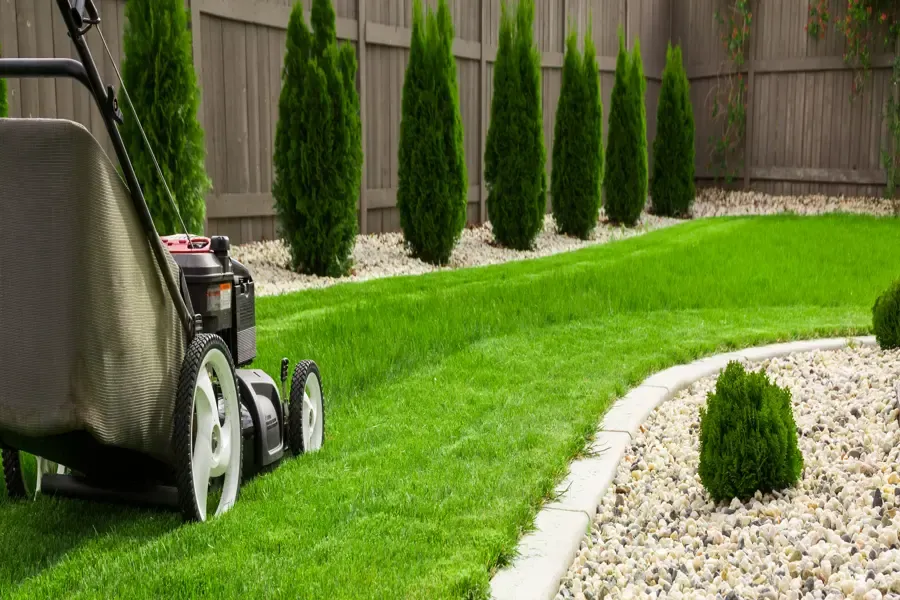
North Idaho landscaping guide and educational resource featuring seasonal timing context supporting stronger maintenance habits in Post Falls, Coeur d'Alene, and North Idaho
May – June · Growing Season Setup

Fertilize turf with slow-release nitrogen formula

A well-timed spring fertilization with a slow-release nitrogen formula feeds your turf steadily through the growing season without the flush of fast growth that strains the plant and requires constant mowing.

Why This Matters in North Idaho

North Idaho's cool spring soils warm slowly, meaning fast-release nitrogen applied too early either sits unused or leaches before the turf can absorb it. Slow-release formulas — sulfur-coated urea or polymer-coated urea — match feed rate to actual soil temperature and root activity.

Step-by-Step

  1. 1

    Wait for active growth

    Fertilize when turf is actively growing — after you've mowed at least twice. In Post Falls this is typically late April to mid-May. Fertilizing dormant turf wastes product and risks nitrogen leaching into groundwater.

  2. 2

    Choose a slow-release formula

    Look for N-P-K ratios like 24-0-10 or 32-0-10 with at least 50% WIN (Water Insoluble Nitrogen). Avoid "quick green" soluble formulas for the primary spring feeding.

  3. 3

    Apply at the labeled rate for slow-release

    Typical application is 1 lb actual nitrogen per 1,000 sq ft. Divide the rate on the bag to determine how many pounds of product to apply. Use a calibrated broadcast spreader.

  4. 4

    Water in lightly after application

    A light 1/4 inch irrigation after granular fertilizer moves it off leaf blades and into the soil, preventing foliar burn.

  5. 5

    Note application date for fall timing

    Your fall fertilizer application should happen about 8–10 weeks before first frost. Mark your calendar now so you don't forget.

Pro Tips from 20 Years in the Field
  • Avoid fertilizing during a heat wave (soil temps above 85°F) — stressed turf cannot use nutrients efficiently and fertilizer can burn.
  • Sweep or blow fertilizer granules off hard surfaces (driveways, sidewalks) after application — they wash into storm drains and contribute to waterway nutrient loading.
  • If you're on a well, be conservative with nitrogen rates — over-application can impact groundwater quality in Idaho's permeable soils.

When to Call LandscapePros

Our seasonal lawn care programs include soil-temperature-timed fertilization at each growth stage. We track applications and adjust rates based on turf response — no guesswork on your end.

Family-Owned Since 2005

Let us handle the whole calendar.

From spring cleanup to winter dormancy — we know what North Idaho landscapes need, season by season.

May – June

Fertilize turf with slow-release nitrogen formula: Questions We Get Asked

North Idaho's cool spring soils warm slowly, meaning fast-release nitrogen applied too early either sits unused or leaches before the turf can absorb it. Slow-release formulas — sulfur-coated urea or polymer-coated urea — match feed rate to actual soil temperature and root activity.

Get Seasonal Tips
Why does slow-release matter more in North Idaho than anywhere else?
Because our growing season is short and our spring rains are heavy. A fast-release fertilizer applied in May gets half its nitrogen washed straight through the soil profile. Slow-release granules meter nutrients out over 6 to 8 weeks, matching the actual growth window and keeping nitrogen in the root zone where it does work.
When should I fertilize my lawn?
Two applications: a nitrogen-led spring feeding once the lawn is actively growing, roughly mid-May, and a potassium-led fall application in September that builds root reserves for winter. Do not fertilize in the heat of July or late in the fall on a late-green lawn — late nitrogen on a lawn still growing pushes growth that then frost-damages.
Can I fertilize right before a heavy rain?
No. You will lose most of it into the storm drain, and on slopes you can get runoff onto your hardscape. Wait 24 hours of dry weather, apply, then water it in lightly — about a quarter inch — so the nutrients move into the soil rather than sitting on the surface.
How do I know my lawn needs nitrogen versus other nutrients?
Test the soil before guessing. North Idaho lawns are frequently acidic, which locks out phosphorus, and they are often low in potassium. A basic soil test is inexpensive and takes the guesswork out. Applying nitrogen when the real problem is pH or compaction is the most common wasted lawn dollar in this county.
Coeur d'Alene Post Falls Hayden Rathdrum Spirit Lake Dalton Gardens Athol Moscow Genesee Troy Potlatch Deary Sandpoint Ponderay Priest River Dover Kootenai Kellogg Pinehurst Osburn Wallace Smelterville St. Maries Plummer Coeur d'Alene Post Falls Hayden Rathdrum Spirit Lake Dalton Gardens Athol Moscow Genesee Troy Potlatch Deary Sandpoint Ponderay Priest River Dover Kootenai Kellogg Pinehurst Osburn Wallace Smelterville St. Maries Plummer Coeur d'Alene Post Falls Hayden Rathdrum Spirit Lake Dalton Gardens Athol Moscow Genesee Troy Potlatch Deary Sandpoint Ponderay Priest River Dover Kootenai Kellogg Pinehurst Osburn Wallace Smelterville St. Maries Plummer Coeur d'Alene Post Falls Hayden Rathdrum Spirit Lake Dalton Gardens Athol Moscow Genesee Troy Potlatch Deary Sandpoint Ponderay Priest River Dover Kootenai Kellogg Pinehurst Osburn Wallace Smelterville St. Maries Plummer
Call Now Book Free Estimate