Placeholder image
Irrigation / Winterization & Blow-Outs

Winterization & Blow-Outs

Commercial 20+ CFM Compressors Zone-by-Zone Purge (2–3 Passes) Backflow Assembly Winterization Valve Box & Manifold Drainage Controller Shutdown & Preservation Written Zone Map & Documentation
Chimneys Drainage Right-of-Way Clearing Driveway Base Athletic Field Construction Backflow Prevention Testing Commercial Paths Full-Scale Landscape Design Disposal Calibration Natural Stone Inlay Sealing Weed Control Structural Retaining Walls Shrub Health Care Bollard Light Installation Annual Displays Ponds Repair Approaches Natural Boulder Retaining Walls Segmental Block Retaining Walls Pipe Repair Restoration Foundation Excavation Slope Stabilization Relocation SWPPP Compliance Sidewalks Field Mowing Concrete Paving Public Works Infrastructure Underground Utility Installation Continuous Concrete Edging Tree Ring Enclosure Pressure Regulating Valve Installation Irrigation Pump Station Maintenance Optimization Driveway Accents Artificial Grass Invasive Species Management Water Feature Excavation Utility Trenching Valve Maintenance Reporting Bioswale Rain Garden Engineering Cut/Fill Hearths Commercial-Grade Curbing Drip Irrigation Installation Hard Surface Maintenance Smart Controller Integration Land Clearing Park & Playground Construction Blow-Outs Restoration Vegetated Green Roof Maintenance 24/7 Zero-Tolerance Plowing De-Icing Weather Station Smart Central Control Systems HOA Maintenance Flow Sensor Install Security Perimeter Lighting Native Prairie Meadow Restoration Flatwork Mower-Edge Profiles PICP Bed Preparation ADA Compliance Upgrades Detention Ponds Bark Application Bi-Weekly Lawn Care Revegetation Emergency Storm Response Architectural Accent Lighting Native Plant Design Commercial Turf Management Mulch Bed Pre-Emergent Weed Treatment Fall Cleanups Creek Crossings Pigmented Concrete Hydroseeding Automated Lighting Control Systems Energy Savings Porter Services Real-Time Weather Monitoring Overseeding Urban Beautification High-Volume Pumps Irrigation System Retrofitting Natural Stone Patios Vegetation Management Bio-Retention Cell Maintenance Hedge Planting Dust Control Custom Irrigation System Design Custom Integrated Lighting Liquid Brine Pre-Treatment Septic System Site Prep Removal De-Icing Hedge Trimming Dedicated Site Staging Install Slip-and-Fall Mitigation Redefining Seasonal Color Rotations Textured Borders Garden Bed Definition Softscape Installation Integrated Pest Management (IPM) Chimneys Drainage Right-of-Way Clearing Driveway Base Athletic Field Construction Backflow Prevention Testing Commercial Paths Full-Scale Landscape Design Disposal Calibration Natural Stone Inlay Sealing Weed Control Structural Retaining Walls Shrub Health Care Bollard Light Installation Annual Displays Ponds Repair Approaches Natural Boulder Retaining Walls Segmental Block Retaining Walls Pipe Repair Restoration Foundation Excavation Slope Stabilization Relocation SWPPP Compliance Sidewalks Field Mowing Concrete Paving Public Works Infrastructure Underground Utility Installation Continuous Concrete Edging Tree Ring Enclosure Pressure Regulating Valve Installation Irrigation Pump Station Maintenance Optimization Driveway Accents Artificial Grass Invasive Species Management Water Feature Excavation Utility Trenching Valve Maintenance Reporting Bioswale Rain Garden Engineering Cut/Fill Hearths Commercial-Grade Curbing Drip Irrigation Installation Hard Surface Maintenance Smart Controller Integration Land Clearing Park & Playground Construction Blow-Outs Restoration Vegetated Green Roof Maintenance 24/7 Zero-Tolerance Plowing De-Icing Weather Station Smart Central Control Systems HOA Maintenance Flow Sensor Install Security Perimeter Lighting Native Prairie Meadow Restoration Flatwork Mower-Edge Profiles PICP Bed Preparation ADA Compliance Upgrades Detention Ponds Bark Application Bi-Weekly Lawn Care Revegetation Emergency Storm Response Architectural Accent Lighting Native Plant Design Commercial Turf Management Mulch Bed Pre-Emergent Weed Treatment Fall Cleanups Creek Crossings Pigmented Concrete Hydroseeding Automated Lighting Control Systems Energy Savings Porter Services Real-Time Weather Monitoring Overseeding Urban Beautification High-Volume Pumps Irrigation System Retrofitting Natural Stone Patios Vegetation Management Bio-Retention Cell Maintenance Hedge Planting Dust Control Custom Irrigation System Design Custom Integrated Lighting Liquid Brine Pre-Treatment Septic System Site Prep Removal De-Icing Hedge Trimming Dedicated Site Staging Install Slip-and-Fall Mitigation Redefining Seasonal Color Rotations Textured Borders Garden Bed Definition Softscape Installation Integrated Pest Management (IPM) Chimneys Drainage Right-of-Way Clearing Driveway Base Athletic Field Construction Backflow Prevention Testing Commercial Paths Full-Scale Landscape Design Disposal Calibration Natural Stone Inlay Sealing Weed Control Structural Retaining Walls Shrub Health Care Bollard Light Installation Annual Displays Ponds Repair Approaches Natural Boulder Retaining Walls Segmental Block Retaining Walls Pipe Repair Restoration Foundation Excavation Slope Stabilization Relocation SWPPP Compliance Sidewalks Field Mowing Concrete Paving Public Works Infrastructure Underground Utility Installation Continuous Concrete Edging Tree Ring Enclosure Pressure Regulating Valve Installation Irrigation Pump Station Maintenance Optimization Driveway Accents Artificial Grass Invasive Species Management Water Feature Excavation Utility Trenching Valve Maintenance Reporting Bioswale Rain Garden Engineering Cut/Fill Hearths Commercial-Grade Curbing Drip Irrigation Installation Hard Surface Maintenance Smart Controller Integration Land Clearing Park & Playground Construction Blow-Outs Restoration Vegetated Green Roof Maintenance 24/7 Zero-Tolerance Plowing De-Icing Weather Station Smart Central Control Systems HOA Maintenance Flow Sensor Install Security Perimeter Lighting Native Prairie Meadow Restoration Flatwork Mower-Edge Profiles PICP Bed Preparation ADA Compliance Upgrades Detention Ponds Bark Application Bi-Weekly Lawn Care Revegetation Emergency Storm Response Architectural Accent Lighting Native Plant Design Commercial Turf Management Mulch Bed Pre-Emergent Weed Treatment Fall Cleanups Creek Crossings Pigmented Concrete Hydroseeding Automated Lighting Control Systems Energy Savings Porter Services Real-Time Weather Monitoring Overseeding Urban Beautification High-Volume Pumps Irrigation System Retrofitting Natural Stone Patios Vegetation Management Bio-Retention Cell Maintenance Hedge Planting Dust Control Custom Irrigation System Design Custom Integrated Lighting Liquid Brine Pre-Treatment Septic System Site Prep Removal De-Icing Hedge Trimming Dedicated Site Staging Install Slip-and-Fall Mitigation Redefining Seasonal Color Rotations Textured Borders Garden Bed Definition Softscape Installation Integrated Pest Management (IPM) Chimneys Drainage Right-of-Way Clearing Driveway Base Athletic Field Construction Backflow Prevention Testing Commercial Paths Full-Scale Landscape Design Disposal Calibration Natural Stone Inlay Sealing Weed Control Structural Retaining Walls Shrub Health Care Bollard Light Installation Annual Displays Ponds Repair Approaches Natural Boulder Retaining Walls Segmental Block Retaining Walls Pipe Repair Restoration Foundation Excavation Slope Stabilization Relocation SWPPP Compliance Sidewalks Field Mowing Concrete Paving Public Works Infrastructure Underground Utility Installation Continuous Concrete Edging Tree Ring Enclosure Pressure Regulating Valve Installation Irrigation Pump Station Maintenance Optimization Driveway Accents Artificial Grass Invasive Species Management Water Feature Excavation Utility Trenching Valve Maintenance Reporting Bioswale Rain Garden Engineering Cut/Fill Hearths Commercial-Grade Curbing Drip Irrigation Installation Hard Surface Maintenance Smart Controller Integration Land Clearing Park & Playground Construction Blow-Outs Restoration Vegetated Green Roof Maintenance 24/7 Zero-Tolerance Plowing De-Icing Weather Station Smart Central Control Systems HOA Maintenance Flow Sensor Install Security Perimeter Lighting Native Prairie Meadow Restoration Flatwork Mower-Edge Profiles PICP Bed Preparation ADA Compliance Upgrades Detention Ponds Bark Application Bi-Weekly Lawn Care Revegetation Emergency Storm Response Architectural Accent Lighting Native Plant Design Commercial Turf Management Mulch Bed Pre-Emergent Weed Treatment Fall Cleanups Creek Crossings Pigmented Concrete Hydroseeding Automated Lighting Control Systems Energy Savings Porter Services Real-Time Weather Monitoring Overseeding Urban Beautification High-Volume Pumps Irrigation System Retrofitting Natural Stone Patios Vegetation Management Bio-Retention Cell Maintenance Hedge Planting Dust Control Custom Irrigation System Design Custom Integrated Lighting Liquid Brine Pre-Treatment Septic System Site Prep Removal De-Icing Hedge Trimming Dedicated Site Staging Install Slip-and-Fall Mitigation Redefining Seasonal Color Rotations Textured Borders Garden Bed Definition Softscape Installation Integrated Pest Management (IPM)
Winterization, North Idaho Standard

One hard freeze is all it takes
to crack what you spent thousands building.

North Idaho winters are not forgiving to irrigation systems left with residual water in poly laterals, brass backflow assemblies, and valve bodies. A January that dips to 8°F — well within normal range for Post Falls and Rathdrum — will find every water-filled fitting in your system. Poly pipe cracks at the elbow. Valve bodies split at the diaphragm seat. Backflow assembly chambers freeze solid.

LP's winterization service uses commercial rotary screw compressors producing real volume — not underpowered consumer units that leave water in the laterals just beyond the head. We purge every zone, drain every valve, properly position every backflow assembly, and document everything before we leave. Your system wakes up in April the same way it went to sleep in September.
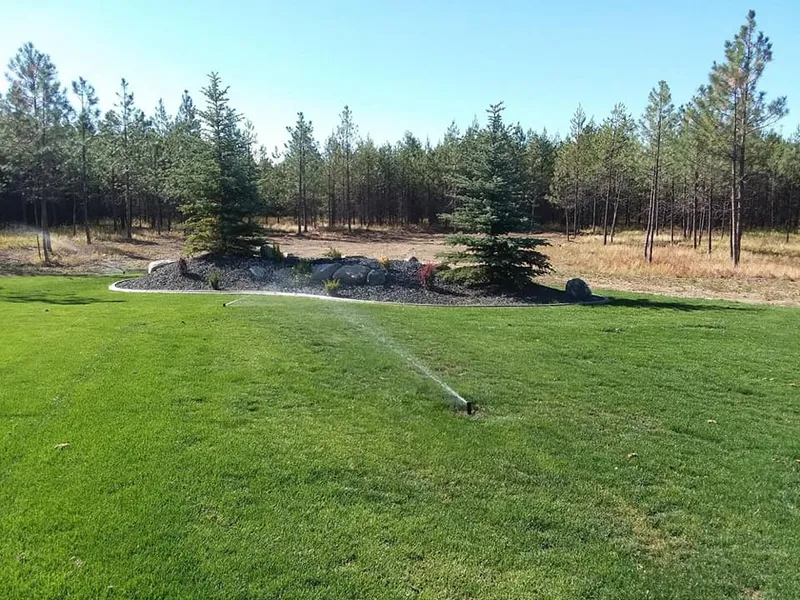
Landscape maintenance and irrigation service project featuring irrigation performance tuning and seasonal water control in Post Falls, Coeur d'Alene, and North Idaho
Why Proper Winterization Matters

Water expands when it freezes.
Your fittings don't.

Prevents Freeze-Crack Damage to Poly Pipe and Fittings

Water expands approximately 9% when it freezes. Poly lateral line, PVC mainline, and brass fittings that hold residual water through a Kootenai County winter — where January lows regularly reach 10–15°F — will crack. A single cracked lateral segment that LP would have cleared for under $150 at winterization can cost $400–$900 to locate, excavate, and repair in spring.

Protects Ball Valves and Diaphragm Valves

The shutoff ball valves on your backflow assembly and the diaphragm valves controlling each zone are the most expensive individual components in the system. Brass ball valves that freeze crack at the body, requiring full assembly replacement. Diaphragm valves with residual water in the pilot chamber can split the valve body or destroy the diaphragm seat, turning a $12 service part into a $65–$120 valve replacement.

Insurance Against Early October Cold Snaps

North Idaho's first hard freeze varies considerably by year — the average first freeze in Post Falls is around October 15, but one-in-five years sees a freeze event before October 1. Homeowners who schedule winterization in early October are protected. Those who wait until "it stays cold" take a meaningful risk every year. LP runs blow-outs beginning in mid-September, and schedules fill quickly.

Documented Record for Spring Startup

LP's written zone map and shutdown confirmation eliminates the guesswork at spring startup — we know which valve controls which zone, what pressure each zone ran at in the fall, and what issues were noted. For homeowners who sell their property, that documentation transfers as a system record to the new owner, a real asset during a North Idaho real estate transaction.

How LP Winterizes a System

Volume, sequence, and documentation —
not a single-pass guess.

01

Commercial Compressor Sizing

The most common mistake in irrigation blow-outs is an undersized compressor. Consumer-grade units producing 5–12 CFM cannot move enough volume through lateral lines to fully purge residual water — they clear the head itself while leaving standing water 12–18 inches back in the lateral, exactly where freeze damage occurs. LP uses commercial 2-stage rotary screw compressors producing a minimum of 20 CFM at 50 PSI, ensuring adequate volume to fully evacuate each zone's lateral lines regardless of pipe diameter.

02

Zone-by-Zone Purge Sequence

LP runs every zone through a minimum of 2–3 passes, not a single blast. The first pass clears bulk water from the mainline out to the heads. The second pass draws residual moisture from the lateral lines and fittings. For zones with significant elevation change or long lateral runs — common on sloped North Idaho lots — a third pass ensures the low points are fully evacuated. Pressure limits are strictly observed: spray heads at 50 PSI max, rotors at 50 PSI max, drip zones at 45 PSI, to prevent seal and diaphragm damage.

03

Backflow Assembly Winterization

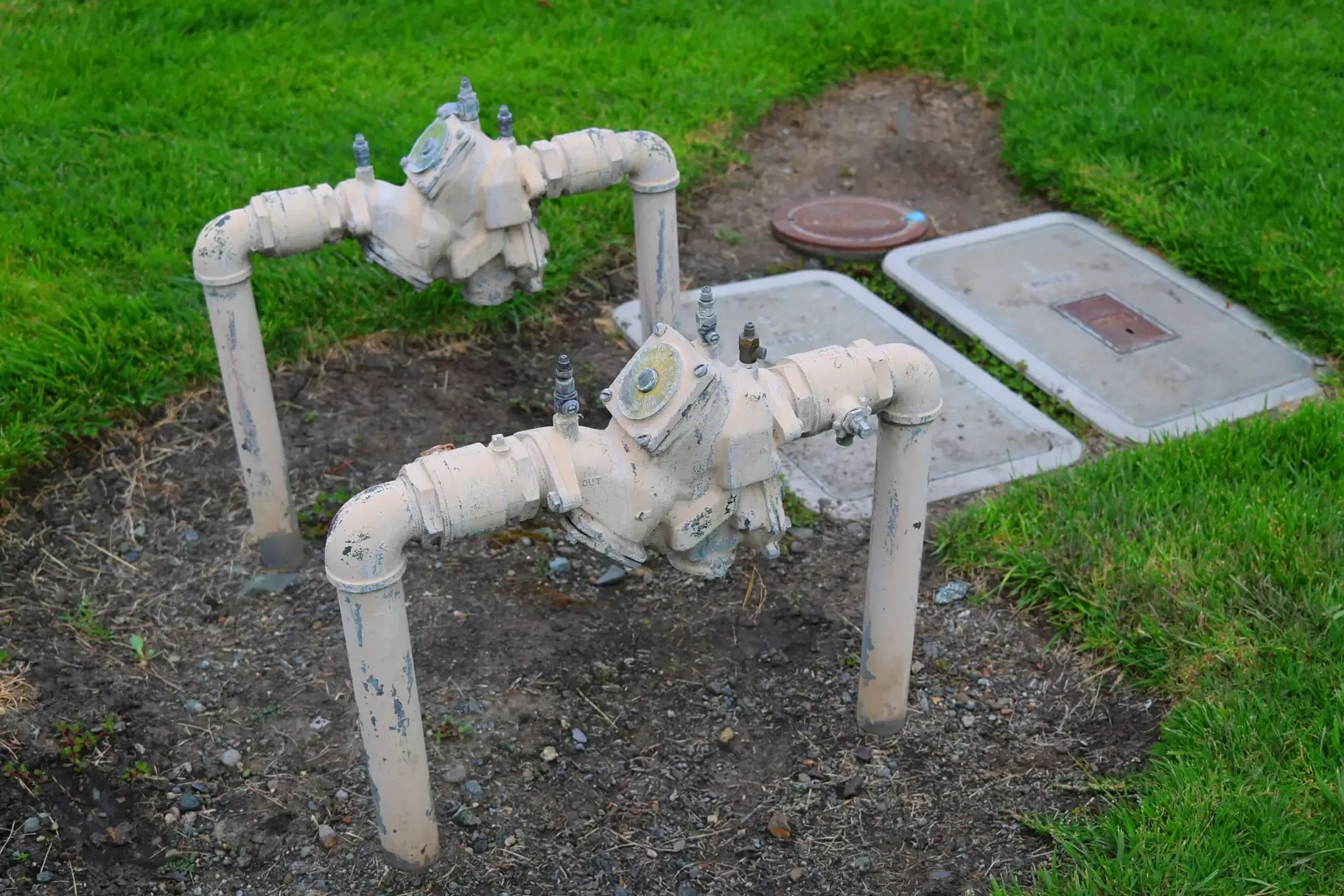
RPZ and double-check backflow assemblies have internal chambers and test ports that hold water after a standard blow-out if not properly drained. LP drains backflow assemblies fully, repositions the two shutoff ball valves to the 45-degree intermediate position (which prevents vacuum-lock during spring fill), and leaves the test cocks slightly open — the industry-standard positioning that prevents trapped water from expanding in the brass body during a freeze.

04

Valve Box & Manifold Protection

Valve bodies and manifold assemblies sitting below grade in plastic valve boxes collect residual water in the solenoid ports, pilot tubing, and diaphragm chambers. LP manually drains valve bodies after the zone blow-out cycle, confirms pilot ports are clear of standing water, and inspects valve box covers for cracks or missing lids that would expose the manifold to full freeze penetration during January cold snaps.

05

Controller Shutdown

Simply setting an irrigation controller to "Off" doesn't always protect it from a power outage or a start signal from a malfunctioning sensor. LP sets every controller to "Rain Mode" rather than full off — this preserves programs and zone runtimes for spring startup while preventing any zone from firing, even if a sensor glitch or power restoration sends an errant activation signal. Battery backup modules are inspected and battery condition noted.

06

Post-Blowout Documentation

When LP finishes a winterization, we leave the homeowner with a written zone map showing each controller station, its corresponding valve location, head count, and pipe size, along with a dated shutdown confirmation noting compressor CFM used, pressure observed per zone, and any damage or concerns identified during the blow-out. That document travels to our file too — so when you call for spring startup, we're not starting from scratch.
Recent Winterizations

Fall blow-out work across Post Falls, CDA, and Hayden.

Maintenance project image featuring debris control supporting fewer stress symptoms in Post Falls, Coeur d'Alene, and North Idaho
Maintenance project image featuring irrigation observation supporting owner confidence in Post Falls, Coeur d'Alene, and North Idaho
Maintenance project image featuring edge refinement supporting owner confidence in Post Falls, Coeur d'Alene, and North Idaho
Maintenance project image featuring service routing supporting healthier seasonal growth in Post Falls, Coeur d'Alene, and North Idaho
Common Questions

Frequently Asked Questions

When should I winterize my irrigation system in North Idaho?
The target window for irrigation blow-outs in Kootenai and Bonner Counties is mid-September through mid-October. The first hard freeze in Post Falls and CDA typically arrives around October 15, but surprises happen — early cold snaps below 32°F at ground level occurred in late September in multiple recent years. LP strongly recommends scheduling before October 1 to avoid schedule conflicts and to ensure your system is protected before the first freeze event, not after it.
Does LandscapePros use air or water for irrigation winterization?
Air — specifically, compressed air from a commercial 2-stage rotary screw compressor producing 20+ CFM at 50 PSI. There is no "water blow-out." The entire purpose of winterization is to fully evacuate water from the lateral lines, head bodies, backflow assembly, and valve chambers using compressed air before freezing temperatures arrive. Draining alone removes water from mainline and low points but leaves residual water in horizontal laterals that a gravity drain cannot clear.
What happens if I skip irrigation winterization in Post Falls or CDA?
In a mild winter, possibly nothing — some years North Idaho sees minimal sustained cold and systems survive. But "possibly nothing" is not a plan. In a typical Kootenai County winter, an un-winterized system will crack poly laterals at fittings and elbows, split the PVC mainline at any low point that accumulates standing water, damage the backflow assembly's internal chambers, and destroy valve diaphragm seats. Total repair cost for a complete freeze-failure event typically runs $800–$2,500 depending on how many laterals cracked and whether the backflow assembly survived.
What does an irrigation blow-out service cost in North Idaho?
LP's winterization pricing is based on zone count. A typical residential system with 6–10 zones runs $95–$155. Systems with more than 10 zones, significant elevation change requiring additional passes, or complex drip zone manifolds are quoted individually. LP provides pricing upfront and does not add a fuel surcharge or "equipment fee" on top of the service rate.
What does "freeze damage" to an irrigation system actually look like?
Freeze damage in irrigation systems typically manifests in spring as zones that don't build pressure (cracked lateral lines allowing water to escape underground), zones where multiple heads barely pop up (pressure loss from a split mainline segment), a backflow assembly that leaks or fails its annual test, or valve bodies that either won't open or won't close (split diaphragm seat or cracked valve body). In severe cases, the entire mainline from the meter to the backflow assembly — often installed in a shallow trench — can split at multiple points if it holds water through a hard freeze.

Free Estimate

Don't let a $150 blow-out turn into a $1,500 spring repair.

Coeur d'Alene Post Falls Hayden Rathdrum Spirit Lake Dalton Gardens Athol Moscow Genesee Troy Potlatch Deary Sandpoint Ponderay Priest River Dover Kootenai Kellogg Pinehurst Osburn Wallace Smelterville St. Maries Plummer Coeur d'Alene Post Falls Hayden Rathdrum Spirit Lake Dalton Gardens Athol Moscow Genesee Troy Potlatch Deary Sandpoint Ponderay Priest River Dover Kootenai Kellogg Pinehurst Osburn Wallace Smelterville St. Maries Plummer Coeur d'Alene Post Falls Hayden Rathdrum Spirit Lake Dalton Gardens Athol Moscow Genesee Troy Potlatch Deary Sandpoint Ponderay Priest River Dover Kootenai Kellogg Pinehurst Osburn Wallace Smelterville St. Maries Plummer Coeur d'Alene Post Falls Hayden Rathdrum Spirit Lake Dalton Gardens Athol Moscow Genesee Troy Potlatch Deary Sandpoint Ponderay Priest River Dover Kootenai Kellogg Pinehurst Osburn Wallace Smelterville St. Maries Plummer
Call Now Book Free Estimate