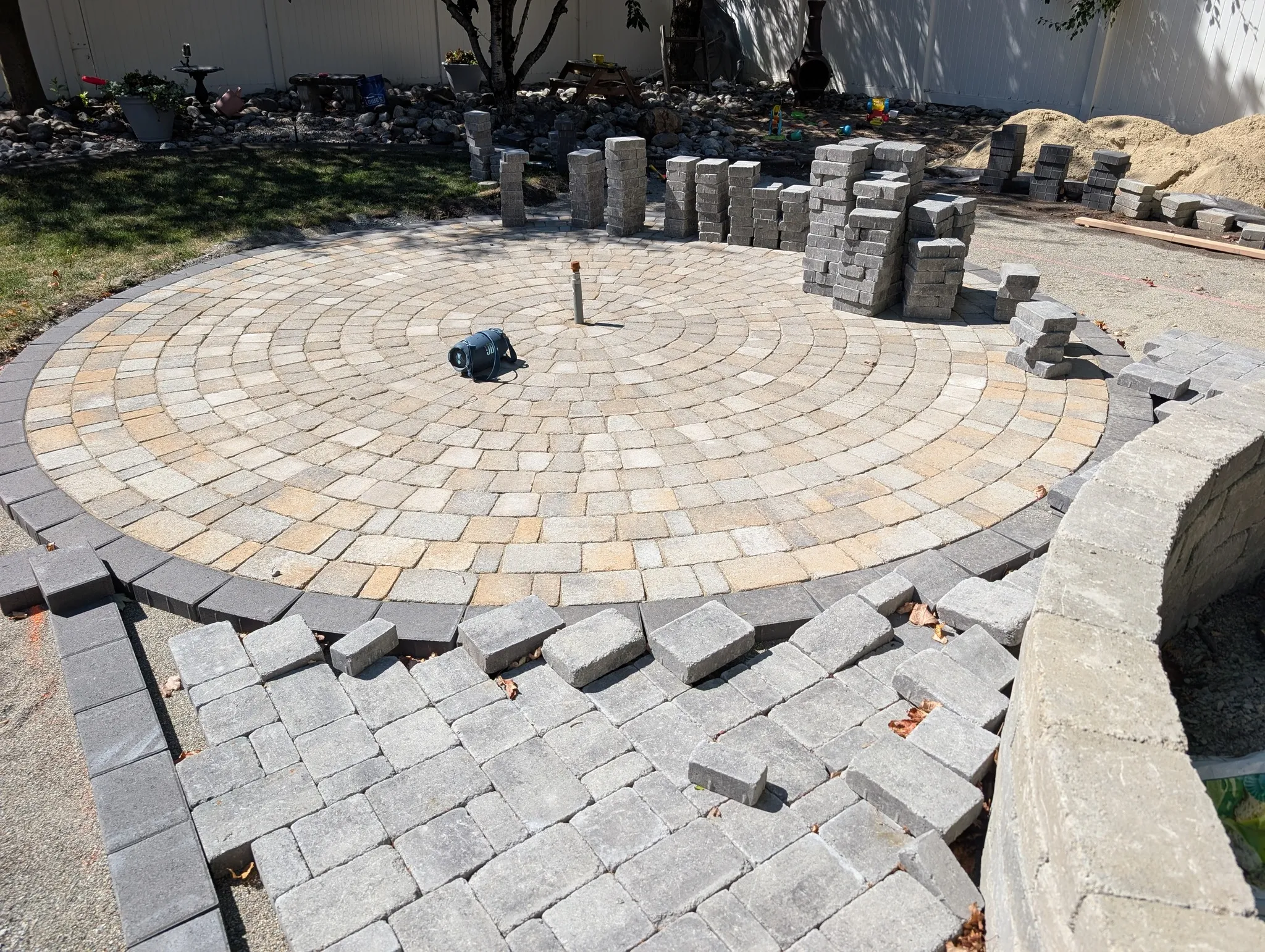
Patio and paving installation with custom stone layout and edge definition featuring material fit-and-finish supporting refined outdoor-living usability in Post Falls, Coeur d'Alene, and North Idaho
Hardscaping / Permeable Pavement

Permeable Pavement

PICP Pavers Open-Graded Base Stormwater Mgmt Overflow Routing Compliance Support
24/7 Zero-Tolerance Plowing Removal Continuous Concrete Edging Segmental Block Retaining Walls PICP Custom Irrigation System Design Smart Controller Integration Fall Cleanups Right-of-Way Clearing Full-Scale Landscape Design Detention Ponds Drip Irrigation Installation Garden Bed Definition Relocation Mower-Edge Profiles Hedge Trimming Approaches Field Mowing Driveway Accents Slip-and-Fall Mitigation Utility Trenching Shrub Health Care Blow-Outs Invasive Species Management Bed Preparation Paths Custom Integrated Lighting Artificial Grass Smart Central Control Systems Septic System Site Prep Land Clearing Water Feature Excavation Revegetation Real-Time Weather Monitoring Liquid Brine Pre-Treatment Driveway Base Calibration Energy Savings Drainage Chimneys Natural Stone Inlay De-Icing Irrigation System Retrofitting Emergency Storm Response Architectural Accent Lighting Structural Retaining Walls Textured Borders Restoration Weather Station Bioswale Rain Garden Engineering Flatwork Cut/Fill Security Perimeter Lighting Sidewalks Disposal Overseeding Restoration High-Volume Pumps Hydroseeding Bi-Weekly Lawn Care Pigmented Concrete Redefining Bollard Light Installation Athletic Field Construction Native Prairie Meadow Restoration Irrigation Pump Station Maintenance Native Plant Design Reporting Commercial-Grade Curbing Mulch Bed Pre-Emergent Weed Treatment Annual Displays Hedge Planting Porter Services Hard Surface Maintenance Backflow Prevention Testing Commercial Commercial Turf Management Creek Crossings Weed Control Flow Sensor Install Dedicated Site Staging Seasonal Color Rotations Urban Beautification Bio-Retention Cell Maintenance Bark Application Concrete Paving Optimization Vegetation Management ADA Compliance Upgrades Vegetated Green Roof Maintenance Hearths Sealing Pressure Regulating Valve Installation Tree Ring Enclosure Natural Stone Patios Automated Lighting Control Systems Natural Boulder Retaining Walls SWPPP Compliance Dust Control Foundation Excavation Pipe Repair Repair Install Ponds De-Icing Public Works Infrastructure Integrated Pest Management (IPM) HOA Maintenance Valve Maintenance Underground Utility Installation Park & Playground Construction Slope Stabilization Softscape Installation 24/7 Zero-Tolerance Plowing Removal Continuous Concrete Edging Segmental Block Retaining Walls PICP Custom Irrigation System Design Smart Controller Integration Fall Cleanups Right-of-Way Clearing Full-Scale Landscape Design Detention Ponds Drip Irrigation Installation Garden Bed Definition Relocation Mower-Edge Profiles Hedge Trimming Approaches Field Mowing Driveway Accents Slip-and-Fall Mitigation Utility Trenching Shrub Health Care Blow-Outs Invasive Species Management Bed Preparation Paths Custom Integrated Lighting Artificial Grass Smart Central Control Systems Septic System Site Prep Land Clearing Water Feature Excavation Revegetation Real-Time Weather Monitoring Liquid Brine Pre-Treatment Driveway Base Calibration Energy Savings Drainage Chimneys Natural Stone Inlay De-Icing Irrigation System Retrofitting Emergency Storm Response Architectural Accent Lighting Structural Retaining Walls Textured Borders Restoration Weather Station Bioswale Rain Garden Engineering Flatwork Cut/Fill Security Perimeter Lighting Sidewalks Disposal Overseeding Restoration High-Volume Pumps Hydroseeding Bi-Weekly Lawn Care Pigmented Concrete Redefining Bollard Light Installation Athletic Field Construction Native Prairie Meadow Restoration Irrigation Pump Station Maintenance Native Plant Design Reporting Commercial-Grade Curbing Mulch Bed Pre-Emergent Weed Treatment Annual Displays Hedge Planting Porter Services Hard Surface Maintenance Backflow Prevention Testing Commercial Commercial Turf Management Creek Crossings Weed Control Flow Sensor Install Dedicated Site Staging Seasonal Color Rotations Urban Beautification Bio-Retention Cell Maintenance Bark Application Concrete Paving Optimization Vegetation Management ADA Compliance Upgrades Vegetated Green Roof Maintenance Hearths Sealing Pressure Regulating Valve Installation Tree Ring Enclosure Natural Stone Patios Automated Lighting Control Systems Natural Boulder Retaining Walls SWPPP Compliance Dust Control Foundation Excavation Pipe Repair Repair Install Ponds De-Icing Public Works Infrastructure Integrated Pest Management (IPM) HOA Maintenance Valve Maintenance Underground Utility Installation Park & Playground Construction Slope Stabilization Softscape Installation 24/7 Zero-Tolerance Plowing Removal Continuous Concrete Edging Segmental Block Retaining Walls PICP Custom Irrigation System Design Smart Controller Integration Fall Cleanups Right-of-Way Clearing Full-Scale Landscape Design Detention Ponds Drip Irrigation Installation Garden Bed Definition Relocation Mower-Edge Profiles Hedge Trimming Approaches Field Mowing Driveway Accents Slip-and-Fall Mitigation Utility Trenching Shrub Health Care Blow-Outs Invasive Species Management Bed Preparation Paths Custom Integrated Lighting Artificial Grass Smart Central Control Systems Septic System Site Prep Land Clearing Water Feature Excavation Revegetation Real-Time Weather Monitoring Liquid Brine Pre-Treatment Driveway Base Calibration Energy Savings Drainage Chimneys Natural Stone Inlay De-Icing Irrigation System Retrofitting Emergency Storm Response Architectural Accent Lighting Structural Retaining Walls Textured Borders Restoration Weather Station Bioswale Rain Garden Engineering Flatwork Cut/Fill Security Perimeter Lighting Sidewalks Disposal Overseeding Restoration High-Volume Pumps Hydroseeding Bi-Weekly Lawn Care Pigmented Concrete Redefining Bollard Light Installation Athletic Field Construction Native Prairie Meadow Restoration Irrigation Pump Station Maintenance Native Plant Design Reporting Commercial-Grade Curbing Mulch Bed Pre-Emergent Weed Treatment Annual Displays Hedge Planting Porter Services Hard Surface Maintenance Backflow Prevention Testing Commercial Commercial Turf Management Creek Crossings Weed Control Flow Sensor Install Dedicated Site Staging Seasonal Color Rotations Urban Beautification Bio-Retention Cell Maintenance Bark Application Concrete Paving Optimization Vegetation Management ADA Compliance Upgrades Vegetated Green Roof Maintenance Hearths Sealing Pressure Regulating Valve Installation Tree Ring Enclosure Natural Stone Patios Automated Lighting Control Systems Natural Boulder Retaining Walls SWPPP Compliance Dust Control Foundation Excavation Pipe Repair Repair Install Ponds De-Icing Public Works Infrastructure Integrated Pest Management (IPM) HOA Maintenance Valve Maintenance Underground Utility Installation Park & Playground Construction Slope Stabilization Softscape Installation 24/7 Zero-Tolerance Plowing Removal Continuous Concrete Edging Segmental Block Retaining Walls PICP Custom Irrigation System Design Smart Controller Integration Fall Cleanups Right-of-Way Clearing Full-Scale Landscape Design Detention Ponds Drip Irrigation Installation Garden Bed Definition Relocation Mower-Edge Profiles Hedge Trimming Approaches Field Mowing Driveway Accents Slip-and-Fall Mitigation Utility Trenching Shrub Health Care Blow-Outs Invasive Species Management Bed Preparation Paths Custom Integrated Lighting Artificial Grass Smart Central Control Systems Septic System Site Prep Land Clearing Water Feature Excavation Revegetation Real-Time Weather Monitoring Liquid Brine Pre-Treatment Driveway Base Calibration Energy Savings Drainage Chimneys Natural Stone Inlay De-Icing Irrigation System Retrofitting Emergency Storm Response Architectural Accent Lighting Structural Retaining Walls Textured Borders Restoration Weather Station Bioswale Rain Garden Engineering Flatwork Cut/Fill Security Perimeter Lighting Sidewalks Disposal Overseeding Restoration High-Volume Pumps Hydroseeding Bi-Weekly Lawn Care Pigmented Concrete Redefining Bollard Light Installation Athletic Field Construction Native Prairie Meadow Restoration Irrigation Pump Station Maintenance Native Plant Design Reporting Commercial-Grade Curbing Mulch Bed Pre-Emergent Weed Treatment Annual Displays Hedge Planting Porter Services Hard Surface Maintenance Backflow Prevention Testing Commercial Commercial Turf Management Creek Crossings Weed Control Flow Sensor Install Dedicated Site Staging Seasonal Color Rotations Urban Beautification Bio-Retention Cell Maintenance Bark Application Concrete Paving Optimization Vegetation Management ADA Compliance Upgrades Vegetated Green Roof Maintenance Hearths Sealing Pressure Regulating Valve Installation Tree Ring Enclosure Natural Stone Patios Automated Lighting Control Systems Natural Boulder Retaining Walls SWPPP Compliance Dust Control Foundation Excavation Pipe Repair Repair Install Ponds De-Icing Public Works Infrastructure Integrated Pest Management (IPM) HOA Maintenance Valve Maintenance Underground Utility Installation Park & Playground Construction Slope Stabilization Softscape Installation
Drainage Built Into the Surface

The smartest drainage system
is the one you walk on.

Traditional hardscape surfaces shed water. Permeable surfaces absorb it. PICP — permeable interlocking concrete pavement — manages stormwater at the point of impact rather than routing it off the edge of a surface and into your yard, your neighbor's yard, or the municipal stormwater system.

LP designs PICP systems with properly sized open-graded bases, underdrain routing, and overflow protection — because a permeable surface without a designed base is just a paver with wide joints. We've been installing permeable hardscape systems across Post Falls, CDA, and Kootenai County since 2005.

Landscaping project image featuring planting choreography supporting cohesive outdoor-room flow in Post Falls, Coeur d'Alene, and North Idaho
Why Permeable

Hardscape that solves drainage
instead of creating it.

Manage Runoff at the Source

Permeable pavement captures and infiltrates stormwater where it falls rather than routing it off-site. This is the most effective stormwater management approach — reducing peak flow, eliminating pooling, and recharging groundwater. For properties with drainage problem areas, PICP is a hardscape solution that also solves the drainage problem.

Reduces Pooling and Wet Areas

Patios and driveways that pool water after rain are candidates for permeable solutions. Rather than routing runoff off the edge of a surface, PICP manages it below the surface. Post Falls and CDA properties with clay soils benefit most — permeable surfaces slow the runoff that clay soils can't absorb fast enough.

Aesthetic Quality of Standard Pavers

PICP looks identical to standard interlocking pavers from above. The open aggregate joints are narrow enough to be visually indistinct from standard paver joints. Homeowners get the design flexibility of a full paver patio with the stormwater management benefit of a permeable system.

Potential Stormwater Compliance Tool

For new construction and developments subject to Kootenai County or municipal stormwater requirements, PICP and pervious concrete can satisfy retention requirements and reduce the need for traditional stormwater ponds or detention basins. LP works with project engineers to document system performance.

Client Stories

Permeable pavement that manages stormwater across North Idaho.

★★★★★
"Our PICP driveway in Spirit Lake handles all the runoff from our roof and doesn't create puddles in the yard. The engineering was spot-on."
— Tom B., Spirit Lake, ID
★★★★★
"LP designed our permeable patio in Hayden to meet county stormwater requirements. It looks great and actually helps with drainage instead of making it worse."
— Karen M., Hayden, ID
★★★★★
"The open-graded base under our PICP walkway in Sandpoint really works. No more water pooling and the surface stays clean."
— Mike S., Sandpoint, ID
★★★★★
"Our permeable driveway in Coeur d'Alene has eliminated the runoff issues we had before. LP's engineering made all the difference."
— Jennifer R., Coeur d'Alene, ID
Systems & Engineering

From surface to subsurface:
every layer engineered.

01

PICP — Permeable Interlocking Pavers

Permeable interlocking concrete pavement (PICP) uses open-jointed concrete paver units filled with washed aggregate rather than polymeric sand. Water passes vertically through the joints into an open-graded aggregate base reservoir below. The base stores water temporarily and allows it to infiltrate into native soil or drain to a designed outlet.

02

Open-Graded Aggregate Base Design

The performance of PICP depends entirely on the open-graded base beneath it. LP specifies base depth, aggregate gradation (typically ASTM No. 57 or No. 8 stone), and geotextile separation layers based on the site's soil infiltration rate. The base is the reservoir — it must be sized for the drainage area and storm event it needs to manage.

03

Overflow & Outlet Engineering

PICP systems need a designed overflow outlet for rain events that exceed the base reservoir capacity. LP engineers overflow inlets, perforated underdrain pipes, and outlet routing as part of every PICP system — so when a 100-year event exceeds the base capacity, water has a designed path out rather than backing up.

04

Pervious Concrete Applications

Pervious concrete uses a gap-graded mix with minimal fine aggregate, creating a porous slab that allows water to pass through. Less design flexibility than PICP (no pattern or color variation), but lower cost for large-area applications like parking pads, service areas, and commercial applications where stormwater compliance is required.

05

Stormwater Compliance Support

Some Kootenai County developments and commercial properties require stormwater management as a condition of development permits. PICP and pervious concrete can satisfy on-site stormwater retention requirements. LP coordinates with project engineers to specify systems that meet the required retention volume and discharge rate targets.

06

Maintenance & Long-Term Performance

Permeable surfaces require periodic vacuuming or pressure washing to remove fine sediment that accumulates in joints and surface voids over time. LP provides maintenance guidance and can perform scheduled maintenance service. Systems installed over clay-heavy soils with low natural infiltration rates require more active outlet management.

Recent Projects

Permeable hardscape across North Idaho.

Patio and paving installation with custom stone layout and edge definition featuring material fit-and-finish supporting refined outdoor-living usability in Post Falls, Coeur d'Alene, and North Idaho
Common Questions

Frequently Asked Questions

How does permeable pavement work?
Permeable pavement surfaces — interlocking pavers with open aggregate joints (PICP) or pervious concrete — allow stormwater to pass through the surface into an engineered open-graded aggregate base below. The base acts as a temporary reservoir, storing water while it infiltrates into native soil or drains to a designed outlet pipe. The surface looks similar to standard hardscape but manages water vertically rather than routing it off the edge.
Does permeable pavement work in North Idaho's clay soils?
It depends on the system design. In areas with low-infiltration clay soils, a permeable pavement system with only soil infiltration as the outlet will fill quickly and overflow. LP designs PICP systems for clay-soil sites with a perforated underdrain pipe at the base that slowly releases stored water to a controlled outlet — this allows the system to function even when native soil can't absorb water quickly. The base must be sized for the drainage area and design storm event.
Is PICP more expensive than standard pavers?
PICP typically costs 15–25% more than a comparable standard paver installation, primarily due to the more complex base construction (open-graded aggregate, geotextile separators, underdrain piping). The paver units themselves are similar in cost to standard interlocking pavers. When stormwater management value is factored in — eliminating a separate drainage correction, or satisfying a stormwater compliance requirement — the premium is often justified.
Does permeable pavement require maintenance?
Yes — permeable pavement requires periodic maintenance to sustain its infiltration performance. Fine sediment accumulates in the open joints and surface voids over time, reducing flow-through rate. Vacuuming or pressure washing restores performance. PICP joints occasionally need aggregate replenishment. LP recommends a maintenance schedule based on the site's sediment load and provides maintenance service.
Can PICP satisfy stormwater requirements for a development permit in Kootenai County?
PICP and pervious concrete can be used to satisfy on-site stormwater retention requirements in some Kootenai County and municipal permit scenarios. The system must be engineered and documented to demonstrate the required retention volume and discharge rate. LP coordinates with project civil engineers to specify and document systems that meet permit requirements.

Free Estimate

Solve your drainage with the surface itself in North Idaho.

Coeur d'Alene Post Falls Hayden Rathdrum Spirit Lake Dalton Gardens Athol Moscow Genesee Troy Potlatch Deary Sandpoint Ponderay Priest River Dover Kootenai Kellogg Pinehurst Osburn Wallace Smelterville St. Maries Plummer Coeur d'Alene Post Falls Hayden Rathdrum Spirit Lake Dalton Gardens Athol Moscow Genesee Troy Potlatch Deary Sandpoint Ponderay Priest River Dover Kootenai Kellogg Pinehurst Osburn Wallace Smelterville St. Maries Plummer Coeur d'Alene Post Falls Hayden Rathdrum Spirit Lake Dalton Gardens Athol Moscow Genesee Troy Potlatch Deary Sandpoint Ponderay Priest River Dover Kootenai Kellogg Pinehurst Osburn Wallace Smelterville St. Maries Plummer Coeur d'Alene Post Falls Hayden Rathdrum Spirit Lake Dalton Gardens Athol Moscow Genesee Troy Potlatch Deary Sandpoint Ponderay Priest River Dover Kootenai Kellogg Pinehurst Osburn Wallace Smelterville St. Maries Plummer
Call Now Book Free Estimate