
Natural Stone Inlay Patterns
The character of North Idaho
pressed into the border.
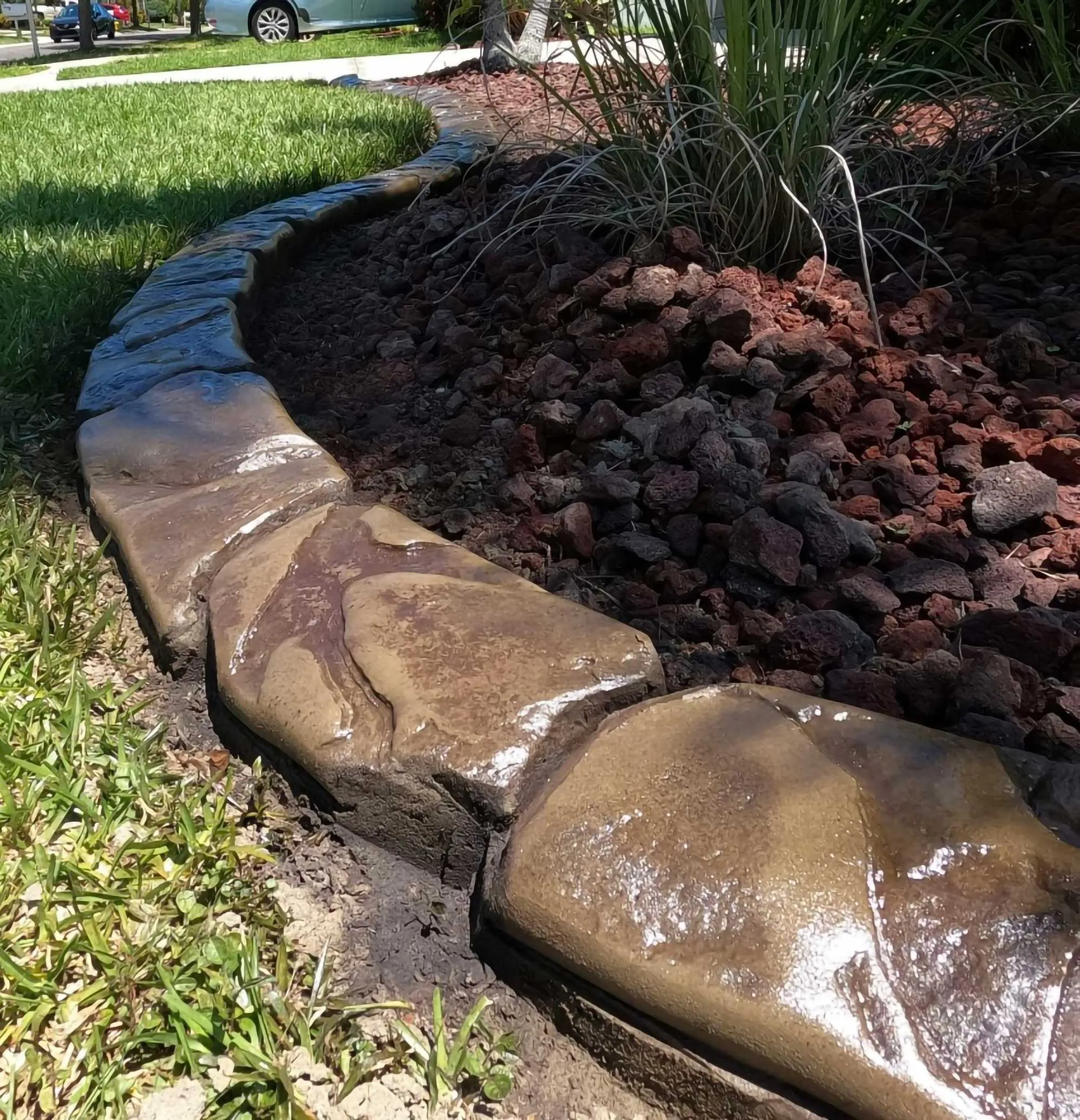
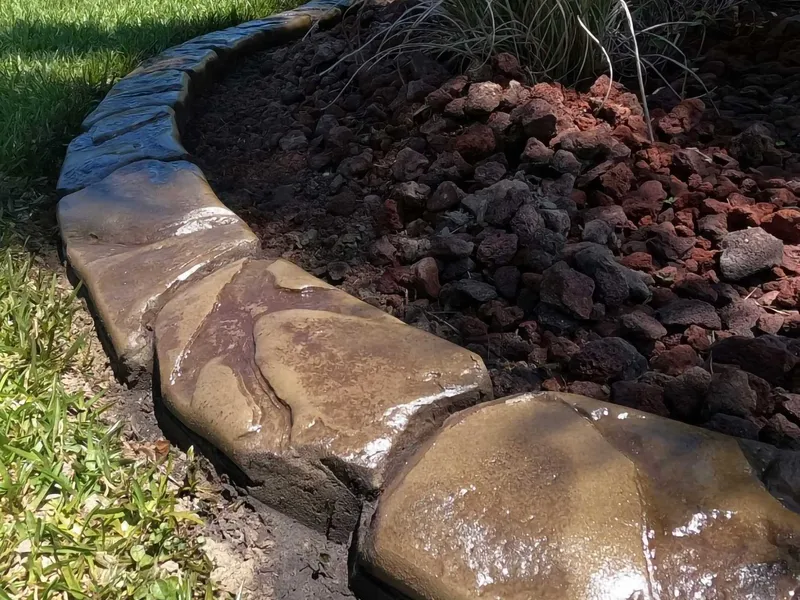
Standard concrete curbing draws a clean, architectural line through the landscape. It's highly functional. But some landscapes want something more — a border that feels like it grew out of the site rather than being installed on it. Natural stone inlay curbing bridges that gap: machine-extruded precision with the character of local river rock and basalt pressed in by hand.
The process is straightforward. After the extrusion machine lays the fresh concrete, LP crew hand-presses selected stone into the plastic surface while it's still workable. The concrete cures around the stone, locking it permanently — not glued to the surface, not exposed by weather, but mechanically integrated into the material itself. North Idaho freeze-thaw cycles don't phase it.
The result ties together the curbing and the broader landscape material palette — the same river rock that lines the dry creek bed, the same basalt that faces the retaining wall, now embedded in the border that ties every zone together. It's an approach that's only possible because LP does the full landscape scope — we know what materials are on your property before we install the border.
More than a border —
a material statement.
Locally Sourced Stone
LP sources river rock, basalt aggregate, and crushed stone from Inland Northwest suppliers — the same stone geology as North Idaho's natural landscape. The inlay reads as native, not imported.
Permanent Embedded Integration
Stone is pressed into the fresh concrete extrusion immediately after the machine pass — not glued to the surface. It's bonded at the molecular level and won't pop out or migrate with freeze-thaw cycling.
Unique to Your Property
No two stone inlay installations are identical. The natural variation of embedded aggregate creates a one-of-a-kind pattern specific to your project — machine-crafted consistency with organic, hand-selected character.
Complements Natural Landscape Materials
Stone inlay curbing is a natural bridge between concrete infrastructure and natural stone elements — retaining walls, boulders, flagstone paths, dry creek beds — unifying the material palette of the entire landscape.
What North Idaho Says
4.8★ · 16 Google reviews
“Josh, Ryan, and their crew did an amazing job with our backyard. We were constantly communicating and they adapted to our changes as necessary. They did a beautiful job and we love our backyard!”
“Landscape Pros delivered top-notch landscaping with professionalism and attention to detail. Highly recommend their services. Very affordable and punctual.”
Verbatim reviews from our Google Business Profile.
Everything you need to know about natural stone inlay curbing.
How is stone embedded in concrete curbing?
Stone is pressed into the fresh concrete immediately after extrusion while it's still in the plastic state. The concrete cures around the stone, creating a mechanical bond that locks it permanently in place. This is fundamentally different from surface adhesion methods and ensures the stone won't pop out or migrate during North Idaho freeze-thaw cycles.
What types of stone work best for inlay curbing?
Smooth river rock and crushed basalt aggregate are the most popular choices in North Idaho. River rock provides organic, rounded forms that blend naturally with the landscape, while basalt creates strong visual contrast with dark gray-black tones. Both materials are locally sourced and proven durable in our climate.
Can stone inlay curbing be installed in curves?
Yes. The extrusion process allows for smooth curves as tight as 2-foot radius. Stone can be embedded in curved sections just as effectively as straight runs. LP stakes the layout during the estimate visit and confirms the stone placement works with your existing plantings and hardscape before installation.
How much does stone inlay curbing cost?
Stone inlay adds $3–$7 per linear foot over standard plain curbing, depending on the stone type and coverage density. Simple river rock scatter patterns are on the lower end, while dense decorative pebble patterns or mixed multi-material inlays are at the higher end. LP provides detailed estimates with line-item pricing.
Does stone inlay require special maintenance?
Stone inlay curbing requires the same maintenance as standard concrete curbing — annual sealing to protect against water infiltration and freeze-thaw damage. The embedded stone doesn't require additional care beyond the normal curbing maintenance schedule. LP recommends sealing every 1-2 years depending on exposure.
Can stone inlay match existing landscape materials?
Yes. LP can source stone that matches your existing retaining walls, flagstone paths, or boulder outcroppings. We bring samples to the estimate visit so you can compare materials side-by-side. This creates a unified material palette across your entire landscape, making the curbing feel like a natural extension of your property's character.
Every stone type,
every inlay style.
From subtle river rock scatter to bold multi-material banded inlay — LP offers the full range of natural stone curbing options, all sourced from Inland Northwest regional suppliers where possible.
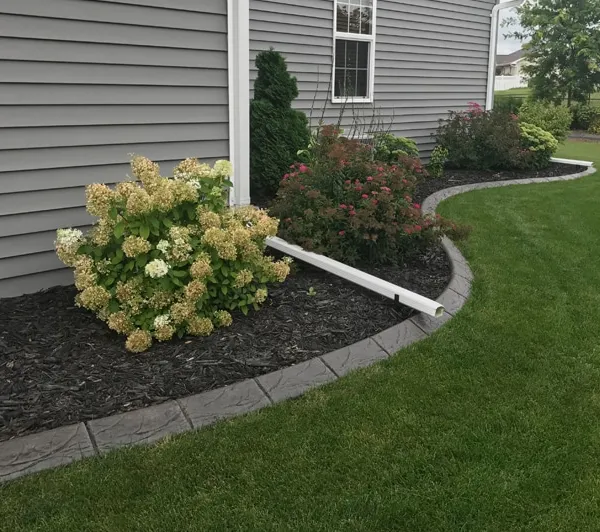
River Rock Scatter
Subtle, natural-looking stone distribution that mimics creek beds and riverbanks — perfect for organic, naturalistic landscape designs in North Idaho.
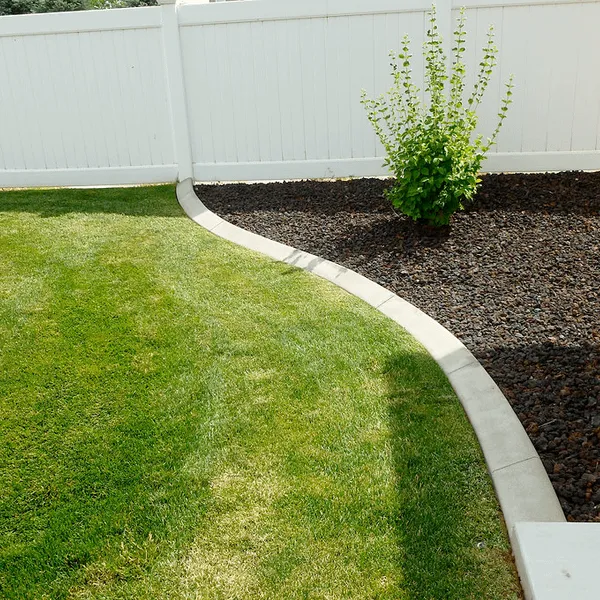
Basalt Aggregate Bands
Bold, contrasting bands of dark basalt stone that create strong visual definition while maintaining the natural stone aesthetic.
Multi-Material Inlay
Complex patterns combining different stone types, sizes, and colors — from subtle two-tone blends to dramatic multi-stone compositions.
Custom Stone Selection
LP works with you to source specific stone types from regional suppliers, matching your property's natural geology or existing stone features.
Freeze-Thaw Rated Stone
All inlay stone is selected for North Idaho's climate — durable aggregates that won't crack, pop out, or degrade in repeated freeze-thaw cycles.
Integrated Pattern Design
Stone patterns designed to complement your overall landscape — coordinating with retaining walls, paths, and other stone features for unified design.
Why local stone matters in
North Idaho landscapes.
The Inland Northwest has a distinct material character: basalt from the ancient lava flows of the Columbia River Basin, glacially rounded river rock from the Spokane, St. Joe, and Coeur d'Alene rivers, and the pale granite and quartzite of the Cabinet and Selkirk ranges. These materials define what feels native in a North Idaho landscape — imported river rock from California or tumbled Mexican pebbles read as foreign in a way that's hard to articulate but immediately felt.
LP sources stone inlay materials primarily from Inland Northwest suppliers — river rock from regional yards, basalt from local quarry operations, and specialty aggregate from Pacific Northwest sources where local isn't available. We show samples on-site during the estimate so you can handle the material and see how it reads against your existing landscape before we commit to any installation.
Stone inlay curbing
in the field.
River Rock Borders
Post Falls, ID
Basalt Aggregate
Coeur d'Alene, WA
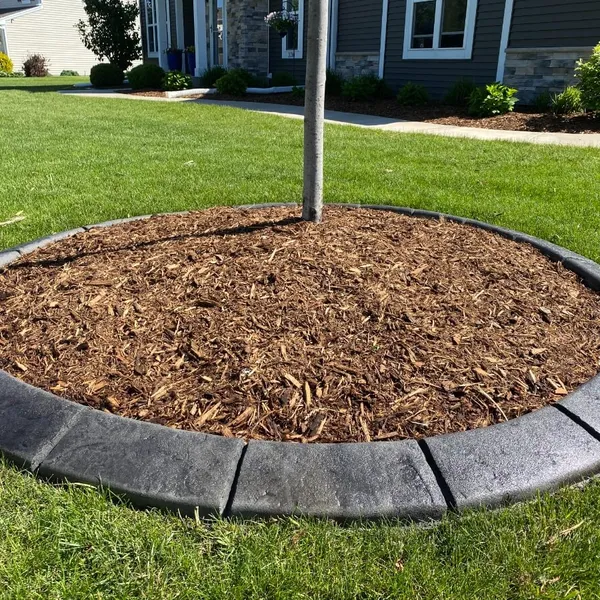
Decorative Pebbles
Hayden, ID
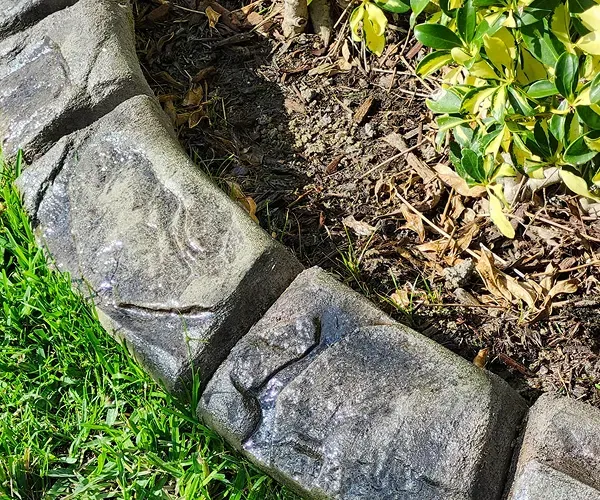
Mixed Materials
Rathdrum, ID
Frequently Asked Questions
Free Estimate