
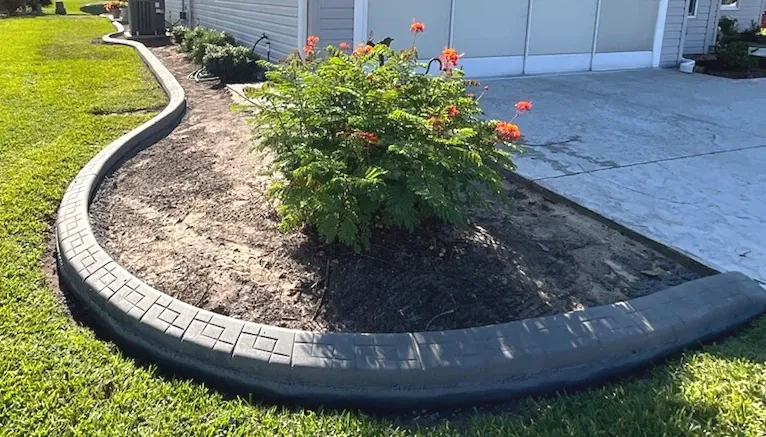
Garden Bed Definition
Permanent edges for beds that look finished year-round.
Machine-extruded concrete garden bed edging installs as a single continuous border — no individual units that shift, no joints that admit grass runners, no plastic that degrades after three Idaho winters. The extruded profile locks into the soil and holds the exact geometry you approved, indefinitely.
LandscapePros has been defining planting beds across Kootenai County since 2005. That experience covers everything from simple straight runs along a foundation to complex curved arc systems that navigate specimen plantings, irrigation heads, and property lines in a single coordinated installation.
A well-defined bed changes how a property reads from the street immediately — before any seasonal color goes in, before the lawn greens up in May. The defined edge is visible year-round and does more for curb appeal per dollar than almost any other single landscape improvement.
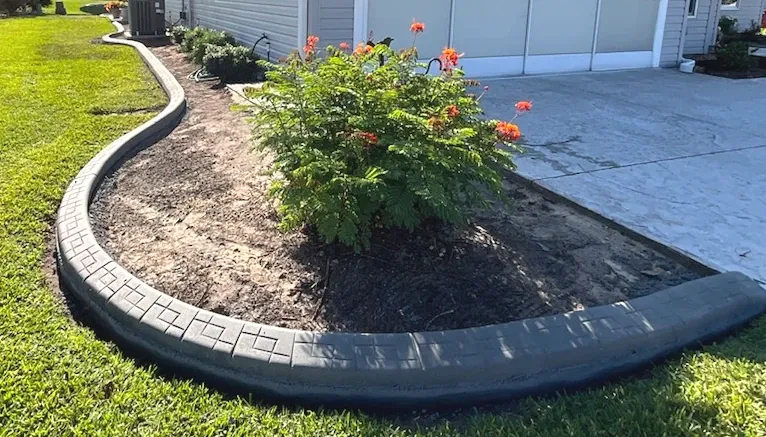
Four reasons Post Falls homeowners choose permanent edging.
Mulch Stays Where You Put It
Concrete edging creates a physical dam that contains bark, mulch, and decorative rock within the bed boundary. No more raking mulch back after rain events or irrigation cycles.
Clean Lines Through the Season
Once installed, the bed boundary remains crisp and defined through spring snowmelt, summer thunderstorms, and fall leaf cleanup — without any re-edging maintenance.
Protects Root Zones
A properly profiled concrete edge directs foot traffic, mower wheels, and equipment away from the root zone of specimen shrubs and perennials, reducing compaction and root damage.
Increases Property Value
Defined planting beds are one of the highest-visibility landscaping improvements. Real estate professionals in the Coeur d'Alene market consistently cite bed definition as a top-10 curb appeal factor.
What North Idaho Says
4.8★ · 16 Google reviews
“Josh, Ryan, and their crew did an amazing job with our backyard. We were constantly communicating and they adapted to our changes as necessary. They did a beautiful job and we love our backyard!”
“Landscape Pros delivered top-notch landscaping with professionalism and attention to detail. Highly recommend their services. Very affordable and punctual.”
Verbatim reviews from our Google Business Profile.
Everything you need to know about concrete bed edging.
How does concrete edging prevent grass from invading garden beds?
Concrete edging creates a continuous physical barrier that blocks grass rhizomes and weed runners from spreading laterally into planting beds. Unlike plastic or metal edging that can bend or degrade, concrete maintains its position indefinitely, stopping the most persistent invaders like Bermuda grass, quackgrass, and creeping Charlie at the boundary line.
Can bed edging be installed around curved or irregular bed shapes?
Yes. Machine-extruded concrete edging can follow any curve radius or irregular shape. The extrusion process allows for smooth curves as tight as 2-foot radius or complex geometric patterns. LP stakes the layout during the estimate visit and confirms the routing works with your existing plantings and hardscape before installation.
How long does concrete bed edging last?
Properly installed concrete edging lasts indefinitely. The material is impervious to North Idaho's freeze-thaw cycles, UV degradation, and soil movement. Unlike natural stone that can shift or plastic edging that brittles, concrete maintains its position and appearance for the life of the landscape. LP backs our installations with a satisfaction guarantee.
What's the best height for garden bed edging?
For standard planting beds, 4-6 inches provides optimal containment for mulch and decorative rock while maintaining clean visual lines. Taller 8-inch profiles work well for beds on slopes or those used as low retaining walls. LP assesses each bed's specific needs during the estimate and recommends the appropriate height for both function and aesthetics.
Does edging installation damage existing plants?
Minimal disturbance occurs. The curbing machine operates on the surface without deep excavation, and LP routes the edging to avoid major root systems. For beds with mature trees or shrubs, we adjust the layout during staking to provide adequate clearance. Surface roots may be trimmed if they interfere with the installation, but this is rare and discussed beforehand.
How much does concrete bed edging cost per linear foot?
Concrete edging typically costs $2–$4 per linear foot, depending on profile height and local material costs. This is significantly less expensive than natural stone edging ($8–$15 per foot) while providing superior durability and weed control. LP provides detailed estimates with line-item pricing for each bed zone.
Every bed configuration, one installation day.
LandscapePros installs concrete bed edging for every planting configuration on residential properties in Post Falls, Coeur d'Alene, and throughout Kootenai County.
Front Yard Bed Systems
Complete front yard bed definition from property line to foundation — curved arcs, corner beds, island beds — all in one coordinated installation with a consistent profile and color.
Backyard Garden Edging
Kitchen gardens, perennial borders, cutting gardens, and mixed shrub beds in rear yards, where clean definition separates active planting areas from lawn and hardscape.
Foundation Planting Borders
Curbing along house foundations separates the planting bed from turf or hardscape at the building perimeter — containing mulch and directing irrigation water away from the foundation.
Island Bed Edging
Freestanding island beds in the middle of turf areas are one of the most difficult edges to maintain with conventional methods. Continuous concrete edging makes island beds fully self-sufficient.
Raised Bed Containment Walls
Taller curbing profiles (6–8 inches) act as low retaining walls for raised vegetable and flower beds, providing both visual structure and soil containment on sloped terrain.
Annual Color Bed Edging
Lower-profile edging around annual color beds that are replanted each season — durable enough to outlast decades of annual digging and replanting without shifting or breaking down.
Defining beds in North Idaho's
short planting season.
North Idaho's growing season runs roughly Memorial Day to mid-October — about 130–145 frost-free days in the Post Falls/Coeur d'Alene corridor. With less than five months to establish color and growth, every planting bed needs to perform visually from the moment the first annuals go in. Undefined, edgeless beds read as unfinished regardless of the quality of the plants inside them — the bed definition is the frame, and it matters as much as the painting.
LP has been defining planting beds across Kootenai County since 2005. We know the soil types that make conventional plastic edging migrate (heavy clay in the valley) and the frost conditions that heave steel edging in the bench areas above CDA. Concrete is the only material that genuinely holds a bed edge through a North Idaho winter — and we install it to the spec that North Idaho's climate demands.
Average annual frost-free growing days in the Post Falls/CDA corridor — every one counts.
Concrete lip stops mulch migration from rain, irrigation, and foot traffic categorically.
No re-edging, no resetting, no annual replacement — ever, after LP concrete edging is installed.
Defined planting beds rank in the top 10 curb appeal improvements per North Idaho real estate professionals.
Garden bed definition across Kootenai County.
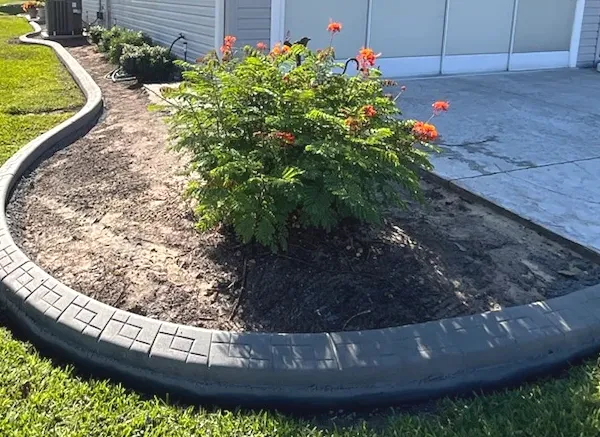
Front Yard Beds
Post Falls, ID
Foundation Borders
Coeur d'Alene, WA
Island Beds
Hayden, ID
Raised Beds
Rathdrum, ID
Frequently Asked Questions
Free Estimate