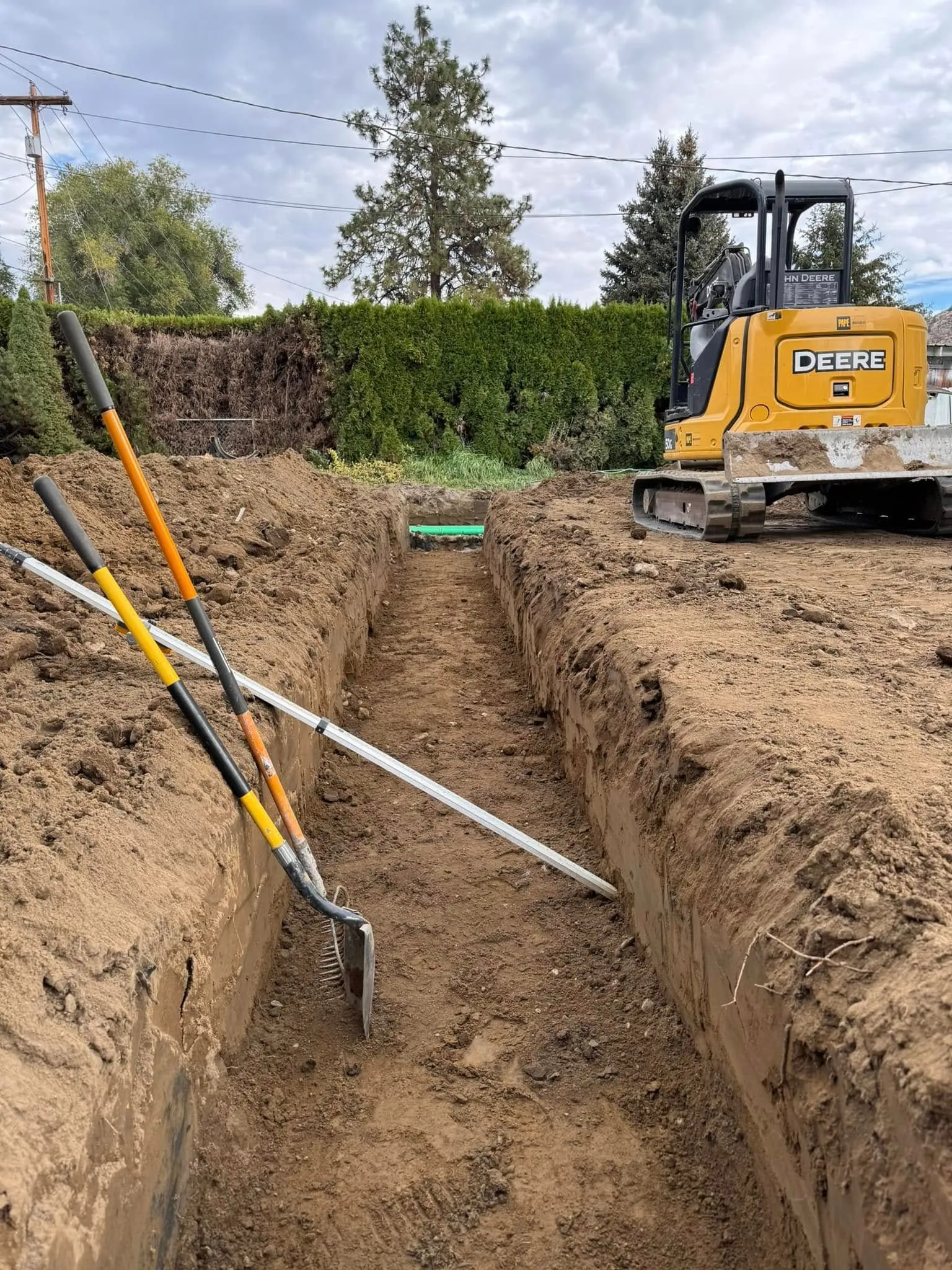
Excavation and grading work for site preparation featuring utility trench alignment and depth-controlled excavation in Post Falls, Coeur d'Alene, and North Idaho
Excavation / Utility Trenching

Utility Line Trenching

Idaho 811 Certified Code Compliant Proper Backfill Utility Coordination
Bi-Weekly Lawn Care Invasive Species Management Energy Savings Water Feature Excavation Bio-Retention Cell Maintenance Garden Bed Definition Disposal Segmental Block Retaining Walls Land Clearing Natural Boulder Retaining Walls Irrigation System Retrofitting Bark Application Overseeding Automated Lighting Control Systems ADA Compliance Upgrades PICP Driveway Base Driveway Accents Bioswale Rain Garden Engineering Septic System Site Prep Reporting Slope Stabilization Custom Irrigation System Design Artificial Grass Pressure Regulating Valve Installation Utility Trenching Real-Time Weather Monitoring Weed Control Approaches Full-Scale Landscape Design Hedge Planting De-Icing Commercial Turf Management Continuous Concrete Edging Restoration Detention Ponds Park & Playground Construction Mower-Edge Profiles Right-of-Way Clearing Foundation Excavation Revegetation Flow Sensor Install Hearths Restoration Repair Natural Stone Patios Annual Displays Drip Irrigation Installation HOA Maintenance Calibration Integrated Pest Management (IPM) Relocation Vegetated Green Roof Maintenance Athletic Field Construction Paths Blow-Outs Redefining Softscape Installation Natural Stone Inlay De-Icing Pigmented Concrete Native Prairie Meadow Restoration Ponds Removal Porter Services Install Valve Maintenance Weather Station Field Mowing Public Works Infrastructure Sidewalks Concrete Paving Shrub Health Care Dedicated Site Staging Mulch Bed Pre-Emergent Weed Treatment Vegetation Management Commercial-Grade Curbing Seasonal Color Rotations Optimization Structural Retaining Walls High-Volume Pumps Sealing Backflow Prevention Testing Commercial Smart Controller Integration Custom Integrated Lighting 24/7 Zero-Tolerance Plowing Emergency Storm Response Creek Crossings Hedge Trimming Flatwork Architectural Accent Lighting Slip-and-Fall Mitigation Liquid Brine Pre-Treatment Fall Cleanups Irrigation Pump Station Maintenance Bollard Light Installation Cut/Fill Pipe Repair Drainage Native Plant Design Textured Borders SWPPP Compliance Hydroseeding Bed Preparation Chimneys Tree Ring Enclosure Underground Utility Installation Urban Beautification Smart Central Control Systems Hard Surface Maintenance Dust Control Security Perimeter Lighting Bi-Weekly Lawn Care Invasive Species Management Energy Savings Water Feature Excavation Bio-Retention Cell Maintenance Garden Bed Definition Disposal Segmental Block Retaining Walls Land Clearing Natural Boulder Retaining Walls Irrigation System Retrofitting Bark Application Overseeding Automated Lighting Control Systems ADA Compliance Upgrades PICP Driveway Base Driveway Accents Bioswale Rain Garden Engineering Septic System Site Prep Reporting Slope Stabilization Custom Irrigation System Design Artificial Grass Pressure Regulating Valve Installation Utility Trenching Real-Time Weather Monitoring Weed Control Approaches Full-Scale Landscape Design Hedge Planting De-Icing Commercial Turf Management Continuous Concrete Edging Restoration Detention Ponds Park & Playground Construction Mower-Edge Profiles Right-of-Way Clearing Foundation Excavation Revegetation Flow Sensor Install Hearths Restoration Repair Natural Stone Patios Annual Displays Drip Irrigation Installation HOA Maintenance Calibration Integrated Pest Management (IPM) Relocation Vegetated Green Roof Maintenance Athletic Field Construction Paths Blow-Outs Redefining Softscape Installation Natural Stone Inlay De-Icing Pigmented Concrete Native Prairie Meadow Restoration Ponds Removal Porter Services Install Valve Maintenance Weather Station Field Mowing Public Works Infrastructure Sidewalks Concrete Paving Shrub Health Care Dedicated Site Staging Mulch Bed Pre-Emergent Weed Treatment Vegetation Management Commercial-Grade Curbing Seasonal Color Rotations Optimization Structural Retaining Walls High-Volume Pumps Sealing Backflow Prevention Testing Commercial Smart Controller Integration Custom Integrated Lighting 24/7 Zero-Tolerance Plowing Emergency Storm Response Creek Crossings Hedge Trimming Flatwork Architectural Accent Lighting Slip-and-Fall Mitigation Liquid Brine Pre-Treatment Fall Cleanups Irrigation Pump Station Maintenance Bollard Light Installation Cut/Fill Pipe Repair Drainage Native Plant Design Textured Borders SWPPP Compliance Hydroseeding Bed Preparation Chimneys Tree Ring Enclosure Underground Utility Installation Urban Beautification Smart Central Control Systems Hard Surface Maintenance Dust Control Security Perimeter Lighting Bi-Weekly Lawn Care Invasive Species Management Energy Savings Water Feature Excavation Bio-Retention Cell Maintenance Garden Bed Definition Disposal Segmental Block Retaining Walls Land Clearing Natural Boulder Retaining Walls Irrigation System Retrofitting Bark Application Overseeding Automated Lighting Control Systems ADA Compliance Upgrades PICP Driveway Base Driveway Accents Bioswale Rain Garden Engineering Septic System Site Prep Reporting Slope Stabilization Custom Irrigation System Design Artificial Grass Pressure Regulating Valve Installation Utility Trenching Real-Time Weather Monitoring Weed Control Approaches Full-Scale Landscape Design Hedge Planting De-Icing Commercial Turf Management Continuous Concrete Edging Restoration Detention Ponds Park & Playground Construction Mower-Edge Profiles Right-of-Way Clearing Foundation Excavation Revegetation Flow Sensor Install Hearths Restoration Repair Natural Stone Patios Annual Displays Drip Irrigation Installation HOA Maintenance Calibration Integrated Pest Management (IPM) Relocation Vegetated Green Roof Maintenance Athletic Field Construction Paths Blow-Outs Redefining Softscape Installation Natural Stone Inlay De-Icing Pigmented Concrete Native Prairie Meadow Restoration Ponds Removal Porter Services Install Valve Maintenance Weather Station Field Mowing Public Works Infrastructure Sidewalks Concrete Paving Shrub Health Care Dedicated Site Staging Mulch Bed Pre-Emergent Weed Treatment Vegetation Management Commercial-Grade Curbing Seasonal Color Rotations Optimization Structural Retaining Walls High-Volume Pumps Sealing Backflow Prevention Testing Commercial Smart Controller Integration Custom Integrated Lighting 24/7 Zero-Tolerance Plowing Emergency Storm Response Creek Crossings Hedge Trimming Flatwork Architectural Accent Lighting Slip-and-Fall Mitigation Liquid Brine Pre-Treatment Fall Cleanups Irrigation Pump Station Maintenance Bollard Light Installation Cut/Fill Pipe Repair Drainage Native Plant Design Textured Borders SWPPP Compliance Hydroseeding Bed Preparation Chimneys Tree Ring Enclosure Underground Utility Installation Urban Beautification Smart Central Control Systems Hard Surface Maintenance Dust Control Security Perimeter Lighting Bi-Weekly Lawn Care Invasive Species Management Energy Savings Water Feature Excavation Bio-Retention Cell Maintenance Garden Bed Definition Disposal Segmental Block Retaining Walls Land Clearing Natural Boulder Retaining Walls Irrigation System Retrofitting Bark Application Overseeding Automated Lighting Control Systems ADA Compliance Upgrades PICP Driveway Base Driveway Accents Bioswale Rain Garden Engineering Septic System Site Prep Reporting Slope Stabilization Custom Irrigation System Design Artificial Grass Pressure Regulating Valve Installation Utility Trenching Real-Time Weather Monitoring Weed Control Approaches Full-Scale Landscape Design Hedge Planting De-Icing Commercial Turf Management Continuous Concrete Edging Restoration Detention Ponds Park & Playground Construction Mower-Edge Profiles Right-of-Way Clearing Foundation Excavation Revegetation Flow Sensor Install Hearths Restoration Repair Natural Stone Patios Annual Displays Drip Irrigation Installation HOA Maintenance Calibration Integrated Pest Management (IPM) Relocation Vegetated Green Roof Maintenance Athletic Field Construction Paths Blow-Outs Redefining Softscape Installation Natural Stone Inlay De-Icing Pigmented Concrete Native Prairie Meadow Restoration Ponds Removal Porter Services Install Valve Maintenance Weather Station Field Mowing Public Works Infrastructure Sidewalks Concrete Paving Shrub Health Care Dedicated Site Staging Mulch Bed Pre-Emergent Weed Treatment Vegetation Management Commercial-Grade Curbing Seasonal Color Rotations Optimization Structural Retaining Walls High-Volume Pumps Sealing Backflow Prevention Testing Commercial Smart Controller Integration Custom Integrated Lighting 24/7 Zero-Tolerance Plowing Emergency Storm Response Creek Crossings Hedge Trimming Flatwork Architectural Accent Lighting Slip-and-Fall Mitigation Liquid Brine Pre-Treatment Fall Cleanups Irrigation Pump Station Maintenance Bollard Light Installation Cut/Fill Pipe Repair Drainage Native Plant Design Textured Borders SWPPP Compliance Hydroseeding Bed Preparation Chimneys Tree Ring Enclosure Underground Utility Installation Urban Beautification Smart Central Control Systems Hard Surface Maintenance Dust Control Security Perimeter Lighting
Precision That Protects Your Investment

Dig once.
Dig it right.

Everything you are about to put underground will eventually need to come back up — a repair, an addition, a repair you did not plan for. How that trench is dug and backfilled determines whether that future job is a clean afternoon or a ruined lawn.

LP has trenched water, sewer, electrical, and gas lines across North Idaho since 2005. Every job starts with an 811 locate, holds to the depth on the utility drawings, and finishes with engineered backfill compacted in lifts. We record where everything is so the next contractor can find it.
Excavation service project photo featuring access planning supporting predictable compaction results in Post Falls and North Idaho from a project gallery
Why Trenching With LP

What a properly trenched
line is worth five years later.

Code Compliance

All trenching meets Idaho building codes, utility standards, and local health district requirements — documented, not assumed.

Utility Protection

Comprehensive locating and careful excavation prevents damage to existing water, gas, and electrical lines on your site and your neighbors'.

Proper Restoration

Engineered backfill and compaction ensures surface stability and prevents the settling and cracking that ruins a new lawn or walk.

OSHA-Compliant Safety

Every excavation follows 29 CFR 1926 Subpart P — daily Competent Person inspections, soil classification, and protective systems on any dig deeper than 5 feet.

Line Types & Methods

Every line has its own
depth, clearance, and bedding.

01

Water Line Installation

Trenching for municipal water connections, well lines, and irrigation mainlines. LP coordinates with Idaho water districts and ensures proper bedding and backfill.

02

Sewer & Drain Lines

Excavation for gravity sewer lines, French drains, and stormwater systems. LP maintains proper slope and provides engineered backfill compaction.

03

Electrical Conduits

Trenching for underground electrical service, lighting circuits, and low-voltage systems. LP protects existing utilities and follows NEC guidelines.

04

Gas Line Trenching

Precision excavation for natural gas and propane lines. LP coordinates with licensed gas fitters and maintains required clearances from other utilities.

05

Idaho 811 Locate & Mark

LP coordinates with Idaho 811 and the utility companies to have every existing underground line marked before any excavation begins. No exceptions, on any job.

06

Engineered Backfill & Compaction

Trenches are backfilled with appropriate material in engineered lifts and compacted to specification. A pipe settles into loose fill, and a settled pipe is a failed pipe.
Recent Projects

Utility lines installed across North Idaho.

Excavation and grading work for site preparation featuring utility trench alignment and depth-controlled excavation in Post Falls, Coeur d'Alene, and North Idaho
Excavation service project photo featuring equipment sequencing supporting predictable compaction results in Post Falls and North Idaho from a project gallery
Excavation service project photo featuring equipment sequencing supporting safe equipment workflow in Post Falls and North Idaho from a project gallery
Common Questions

Frequently Asked Questions

How much does utility trenching cost per linear foot in North Idaho?
Utility trenching in the Post Falls and Kootenai County area typically runs $15–$40 per linear foot depending on trench depth, soil conditions, access, and backfill requirements. Deep trenches, rock, or confined-access work sit at the higher end. LP provides written, itemized estimates after reviewing the route and utility plan.
What is the 811 service, and do you call it for every job?
Idaho 811 is the statewide utility locate and mark service. LP calls 811 and coordinates with affected utility companies on every excavation job before any ground is disturbed. Locates are valid for a limited period and have tolerance zones that must be respected — treating a locate as permanent is one of the most common causes of a utility strike.
Do you install the utility lines, or just excavate?
LP handles the excavation, bedding, and backfill scope. Pipe laying, conduit installation, and connections are performed by the licensed utility contractor for that line. LP coordinates directly with them so the trench is open, dimensioned, and ready when their crew arrives, and backfilled when they are finished.
How deep do trenches need to be in Idaho?
Typical water service lines are trenched to 42 inches minimum below grade, and sewer laterals require enough depth to maintain the required slope. Electrical conduit depth varies by NEC requirements and voltage class. LP trenches to the depth specified by the utility and permit drawings — not to a generic depth.
What safety standards apply to trenching work?
Federal OSHA 29 CFR 1926 Subpart P governs excavation and trenching. It requires daily inspections by a designated Competent Person before workers enter any excavation, soil classification, and protective systems — sloping, shoring, or trench boxes — for excavations deeper than 5 feet. LP documents these inspections on every job.
Can trenching be done in winter in North Idaho?
Yes, with the caveat that frozen ground changes conditions. LP evaluates frost depth, frozen soil stability, and equipment access on the site visit. Below-ground utilities are commonly installed in colder months partly because the ground is already frozen, but any excavation deeper than frost depth in frozen conditions requires specific planning to stay within slope limits.

Free Estimate

Plan your utility installation.

Coeur d'Alene Post Falls Hayden Rathdrum Spirit Lake Dalton Gardens Athol Moscow Genesee Troy Potlatch Deary Sandpoint Ponderay Priest River Dover Kootenai Kellogg Pinehurst Osburn Wallace Smelterville St. Maries Plummer Coeur d'Alene Post Falls Hayden Rathdrum Spirit Lake Dalton Gardens Athol Moscow Genesee Troy Potlatch Deary Sandpoint Ponderay Priest River Dover Kootenai Kellogg Pinehurst Osburn Wallace Smelterville St. Maries Plummer Coeur d'Alene Post Falls Hayden Rathdrum Spirit Lake Dalton Gardens Athol Moscow Genesee Troy Potlatch Deary Sandpoint Ponderay Priest River Dover Kootenai Kellogg Pinehurst Osburn Wallace Smelterville St. Maries Plummer Coeur d'Alene Post Falls Hayden Rathdrum Spirit Lake Dalton Gardens Athol Moscow Genesee Troy Potlatch Deary Sandpoint Ponderay Priest River Dover Kootenai Kellogg Pinehurst Osburn Wallace Smelterville St. Maries Plummer
Call Now Book Free Estimate