
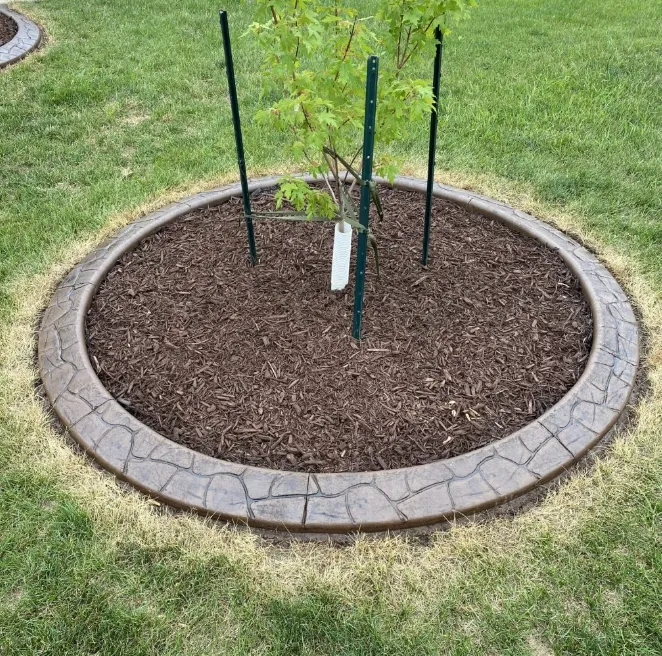
Tree Ring Enclosure
Permanent protection for every specimen tree on your property.
A concrete tree ring is the most direct way to protect a landscape tree that would otherwise be at the mercy of weekly mowing passes and equipment traffic. The continuous extruded border is positioned to root-flare clearance spec — not guessed — keeping the mower blade away from the trunk and the mulch basin intact around the drip line.
LandscapePros has installed tree rings on properties across Kootenai County since 2005 — from newly planted ornamentals in Post Falls subdivisions to established 20-year oaks on Hayden acreage. We measure the drip line, confirm root-flare clearance, and size each ring to the tree rather than the homeowner's aesthetic preference alone.
In North Idaho, the most common cause of landscape tree loss isn't drought or disease — it's repeated physical damage from mowing and equipment traffic at the root flare. A properly sized and positioned concrete ring eliminates that damage category permanently, extending the functional life of every specimen tree it protects.
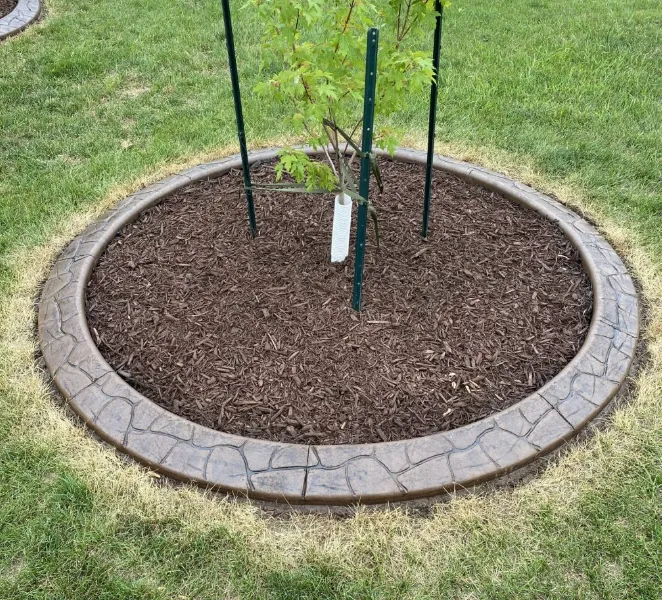
Four reasons a concrete ring protects your trees better than anything else.
Root Zone Protection
A correctly sized tree ring directs mower wheels and equipment away from the root flare, preventing compaction of the critical root zone soil that most North Idaho trees lose over time to repeated equipment passes.
Mulch Anchored in Place
Bark and mulch within the ring stays put through irrigation cycles and heavy rain events — no raking back after every watering, no mulch washing into the lawn.
Eliminates the Trunk Mow Zone
The mower-strike zone around tree trunks is one of the leading causes of landscape tree loss. A concrete ring places the curbing between the blade and the trunk — permanently.
Defines the Watering Zone
The ring creates a natural basin that directs irrigation and rainfall to the root zone rather than allowing it to sheet off across the lawn — especially valuable during North Idaho's dry summer months.
Every ring type, sized to your trees and your landscape.
LandscapePros installs concrete tree ring enclosures for every specimen type and landscape style on residential and commercial properties throughout Kootenai County.
Standard Circular Rings
Clean, geometrically precise circular enclosures sized to the canopy spread of the tree — typically 4–6 feet in diameter for young specimens, up to 10–12 feet for established trees.
Freeform Organic Shapes
For trees in naturalistic or cottage-style landscapes, freeform kidney or teardrop shapes integrate with the surrounding planting design rather than imposing a geometric form on an organic setting.
Multi-Tree Grove Rings
Coordinated rings for grouped specimen plantings — orchard rows, decorative grove plantings, privacy tree clusters — installed in a single mobilization with consistent profile and color.
Root-Flare Clearance Rings
Rings sized and positioned to avoid compressing or covering the root flare — a common mistake with DIY edging that slowly suffocates the tree. LP accounts for correct root-flare clearance in every installation.
Integrated Mulch Basin
Deeper profile rings that act as a true retention basin, holding 3–4 inches of mulch depth within the ring without any migration — ideal for water-thirsty specimen trees on sloped properties.
Decorative Feature Rings
High-profile, often colored or stamped rings around ornamental specimen trees in formal front yards and landscape feature areas — designed to read as a designed element, not just functional edging.
Tree rings in North Idaho's
freeze-thaw landscape.
Landscape trees in the Inland Northwest face stresses that trees in milder climates don't — frost damage to root zones in November and March, soil heaving that can shift equipment-placed plastic rings up to 2–3 inches in a single winter, and the dry, UV-intense July–August period that desiccates exposed root zones quickly. A DIY wire or plastic ring typically survives two or three winters before it needs to be reset or replaced.
Machine-extruded concrete tree rings are formed to depth and sealed before the first frost arrives — they don't shift, they don't heave, and they don't require annual inspection. LP sizes every ring after measuring the tree's drip line and confirming root flare clearance, so the installation protects the tree rather than stressing it. We've installed tree rings on properties from Rathdrum to Hayden for twenty years — the rings outlast the people who requested them.
LP measures and confirms proper root flare clearance before every ring installation — protecting the tree, not just the lawn.
Sized to canopy spread or designer specification; custom sizes available.
No bark migration from irrigation or rainfall — the ring acts as a permanent mulch basin.
Concrete ring separates mower path from trunk, removing the leading cause of landscape tree loss.
Tree ring enclosures across Kootenai County.
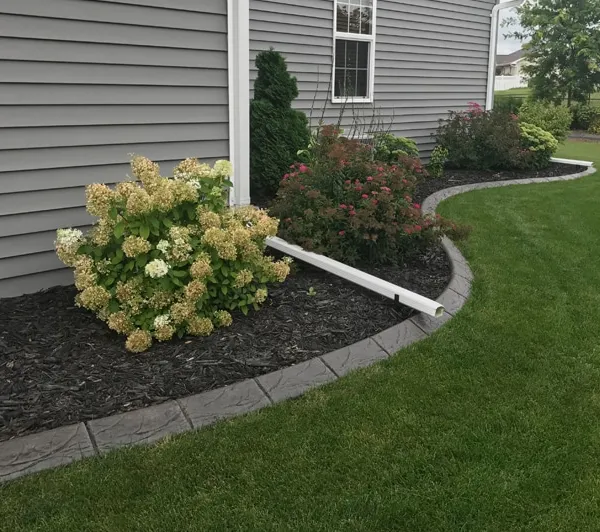
6ft diameter ring around 20-year-old oak
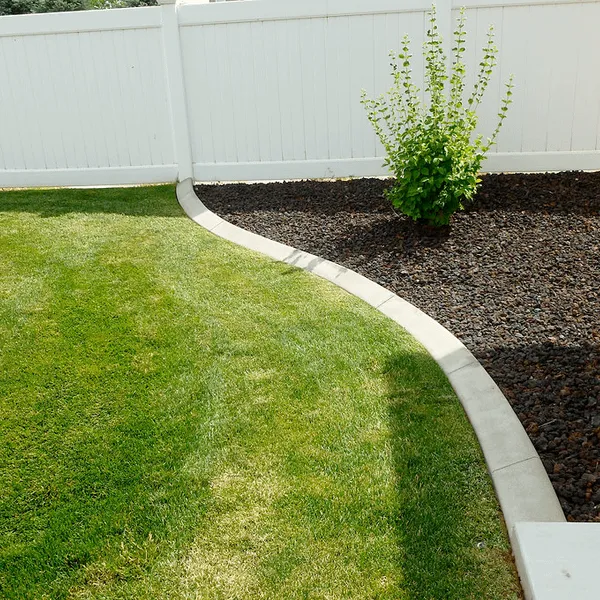
Coordinated grove rings for apple orchard
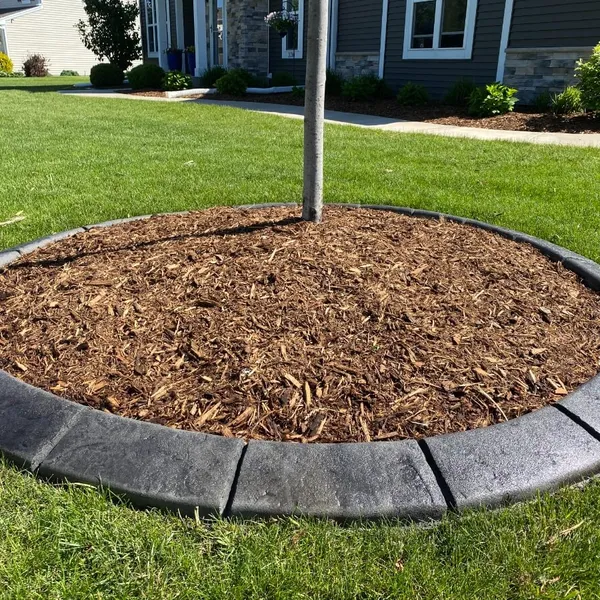
Organic freeform ring in cottage garden
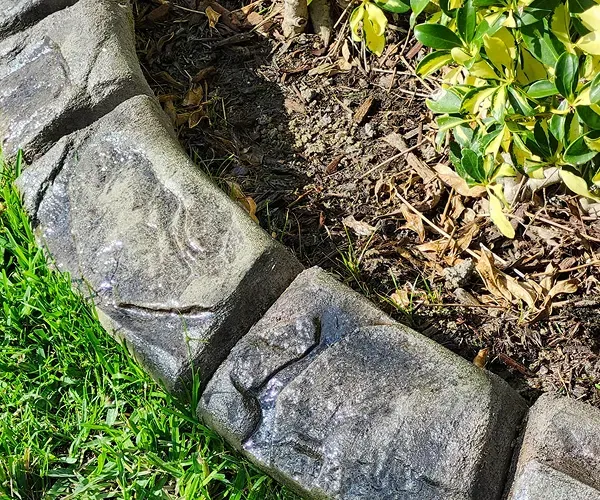
Terra cotta colored decorative ring
What North Idaho Says
4.8★ · 16 Google reviews
“Josh and his crew are great. They just did a spring clean up to get my yard ready for the season...”
Spring cleanups & maintenance
“We absolutely appreciated Josh and his crew coming and cleaning up our flower bed yesterday. The end result is perfect.”
Spring cleanups & maintenance
Verbatim reviews from our Google Business Profile.
Common questions about concrete tree ring enclosures.
How much do concrete tree rings cost?
Concrete tree ring installation costs $8-12 per linear foot, depending on ring diameter and complexity. A typical 6-foot diameter ring costs $150-250 installed. This is a one-time investment that protects your tree for decades.
How long does tree ring installation take?
A single tree ring can be installed in 2-4 hours, depending on size and site conditions. Multiple rings on the same property are completed in one day. The concrete cures for 24-48 hours before mulch can be added.
Do tree rings prevent tree roots from spreading?
No. Tree rings are installed at the surface and don't impede root growth. The ring creates a protected zone around the trunk while allowing roots to spread naturally beneath the lawn and surrounding soil.
Can tree rings be installed around existing trees?
Yes. We specialize in installing rings around established trees. The extrusion process works along the surface without damaging existing roots. We measure the drip line and confirm root flare clearance before installation.
What's the difference between tree rings and garden bed edging?
Tree rings are specifically designed for individual specimen trees, with proper root flare clearance and sizing based on canopy spread. Garden bed edging is typically straight or curved for flower beds and doesn't account for tree-specific protection needs.
How do tree rings help with North Idaho winters?
Concrete rings don't heave or shift like plastic or wire rings during freeze-thaw cycles. They maintain their position and continue protecting the root zone through multiple winters without needing annual adjustment.
Tree rings in North Idaho's
freeze-thaw landscape.
Landscape trees in the Inland Northwest face stresses that trees in milder climates don't — frost damage to root zones in November and March, soil heaving that can shift equipment-placed plastic rings up to 2–3 inches in a single winter, and the dry, UV-intense July–August period that desiccates exposed root zones quickly. A DIY wire or plastic ring typically survives two or three winters before it needs to be reset or replaced.
Machine-extruded concrete tree rings are formed to depth and sealed before the first frost arrives — they don't shift, they don't heave, and they don't require annual inspection. LP sizes every ring after measuring the tree's drip line and confirming root flare clearance, so the installation protects the tree rather than stressing it. We've installed tree rings on properties from Rathdrum to Hayden for twenty years — the rings outlast the people who requested them.
Serving Key North Idaho Locations
LP measures and confirms proper root flare clearance before every ring installation — protecting the tree, not just the lawn.
Sized to canopy spread or designer specification; custom sizes available.
No bark migration from irrigation or rainfall — the ring acts as a permanent mulch basin.
Concrete ring separates mower path from trunk, removing the leading cause of landscape tree loss.
Frequently Asked Questions
Free Estimate