
Custom Integrated Lighting
Light that's built into the landscape — not bolted on top of it.
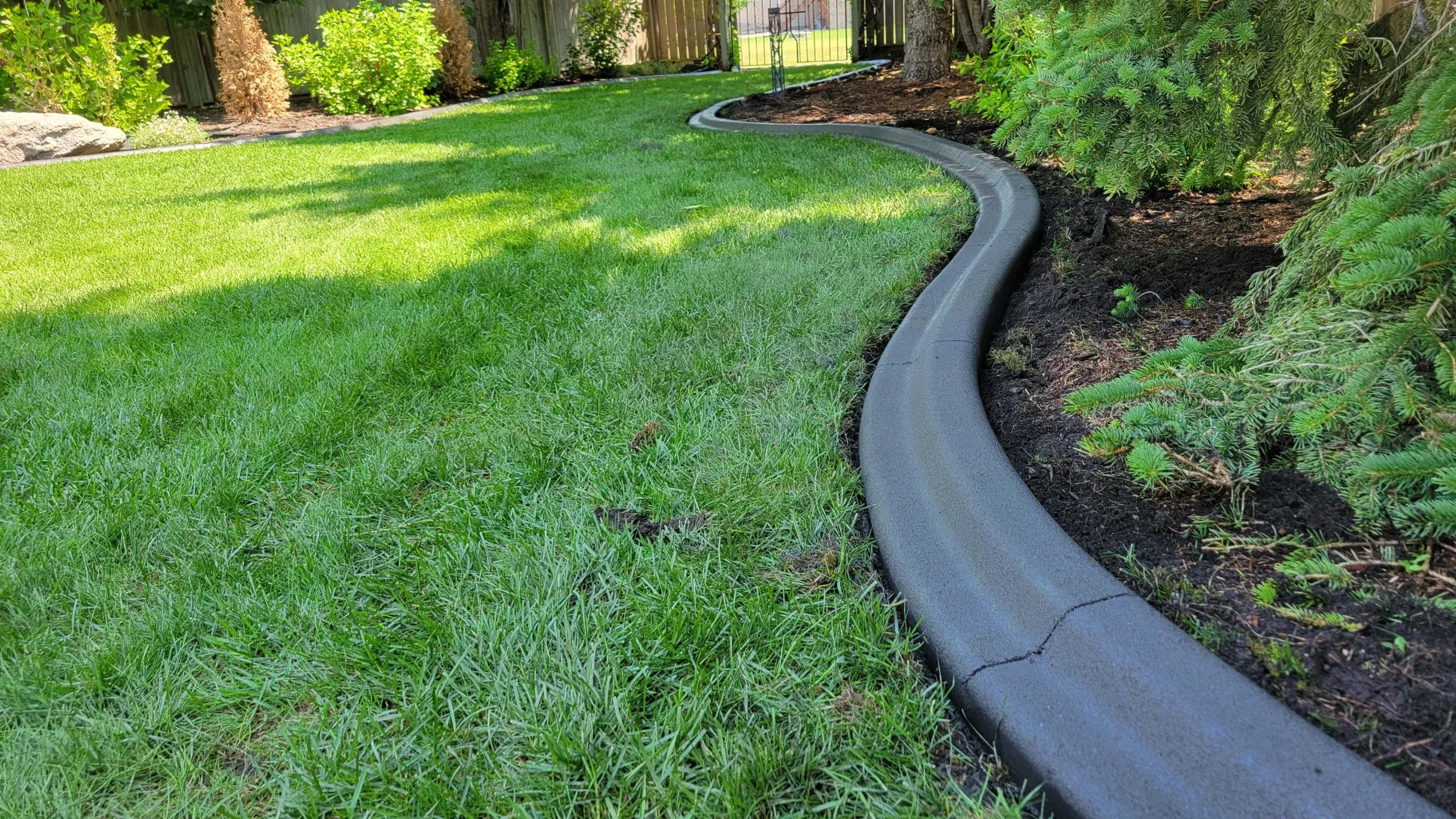
Most landscape lighting is an afterthought — fixtures pushed into the ground next to the path, wiring draped above the bed edge, replaceable bulbs that require a ladder and a flashlight every October. Integrated curbing lighting takes the opposite approach: the LED strip is embedded into the concrete profile during the machine extrusion process, before the concrete sets, so the light source becomes part of the structure.
LP has been doing curbing work in Post Falls, Coeur d'Alene, and the Inland Northwest since 2005. When we added lighting integration to our curbing profiles, the demand was immediate — because clients who saw it understood the difference between a fixture mounted near the path and a fixture that is the path edge. One is decoration. The other is infrastructure.
The result is clean, durable, and designed for North Idaho conditions: freeze-thaw rated concrete, IP67 weatherproofed connections, and low-voltage wiring that doesn't require a licensed electrician to run. It's the kind of detail that looks expensive on the finished product and is genuinely more practical than the surface-mounted alternative.
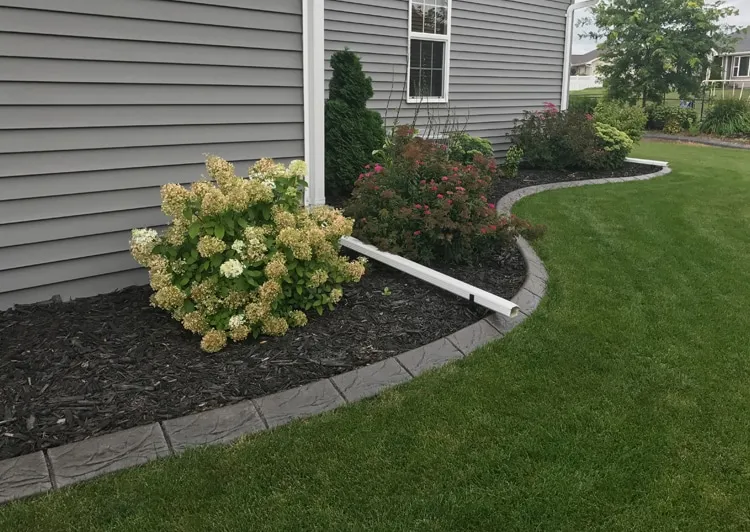
Four reasons embedded lighting outperforms surface fixtures.
Lighting Built In, Not Bolted On
LP integrates low-voltage LED strip channels directly into the curbing profile during extrusion — the light source is embedded in the concrete, not a separate fixture mounted to the surface that can be damaged or displaced.
Pathway Safety After Dark
Illuminated curbing marks the edge of walkways, driveway transitions, and steps in the landscape at exactly the moment they're hardest to see — during evening outdoor living and after-dark arrival.
Extends Outdoor Living Into the Evening
Lit curbing transforms a finished daytime landscape into a fully usable nighttime outdoor room. The light source is close to grade and diffused — ambient, not spotlight — adding atmosphere without glare.
Engineered for North Idaho Winters
The LED channels and wiring are rated for outdoor use at temperatures down to -40°F. Freeze-thaw cycling within the concrete doesn't affect the embedded conduit. All connections are weatherproofed to IP67 standard.
What North Idaho Says
4.8★ · 16 Google reviews
“Josh, Ryan, and their crew did an amazing job with our backyard. We were constantly communicating and they adapted to our changes as necessary. They did a beautiful job and we love our backyard!”
“Landscape Pros delivered top-notch landscaping with professionalism and attention to detail. Highly recommend their services. Very affordable and punctual.”
Verbatim reviews from our Google Business Profile.
Everything you need to know about LED-integrated curbing lighting.
How does integrated lighting compare to traditional landscape lighting?
Traditional landscape lighting uses separate fixtures mounted to stakes or posts, requiring ongoing maintenance, bulb replacement, and creating visual clutter. Integrated lighting embeds the LED source directly into the curbing profile during manufacturing, eliminating fixture maintenance while creating a seamless, architectural lighting effect that enhances rather than competes with the landscape design.
What maintenance is required for integrated curbing lighting?
Virtually none. The LED strips are rated for 50,000 hours of continuous use (approximately 17 years at 8 hours per night). All components are embedded in weatherproof enclosures rated IP67 for submersion. The only maintenance is occasional cleaning of the lens surface and ensuring the transformer remains plugged in. No bulb changes, no fixture adjustments, no winter storage required.
Can integrated lighting be added to existing curbing?
Not practically. The LED channels must be integrated during the concrete extrusion process when the curbing is manufactured. Retrofitting existing curbing requires cutting channels into cured concrete, which compromises structural integrity and rarely produces clean results. LP recommends planning integrated lighting during initial curbing installation for optimal results and cost effectiveness.
How much does integrated lighting cost per linear foot?
$4–$8 per linear foot for the LED integration, plus $150–$300 for the transformer and junction boxes. The cost varies based on lighting density, color temperature selection, and conduit run length. LP provides detailed line-item pricing during estimates, allowing selective lighting of high-impact zones rather than full-system illumination.
Is the lighting compatible with smart home systems?
Yes. The low-voltage LED system is compatible with most smart lighting platforms including Lutron, Philips Hue, and Control4 through compatible dimming controllers. The LED driver can be integrated into whole-home automation systems for scheduling, motion activation, or app-based control. LP handles the low-voltage wiring; you provide the smart controller interface.
What happens if an LED strip fails?
Individual LED failures are rare, but if a strip needs replacement, LP can access the channel through the pre-installed conduit system. Replacement strips are inexpensive ($10–$20 per foot) and installation takes less than an hour. The embedded design ensures failed sections don't affect adjacent lighting zones, and the weatherproof construction prevents moisture ingress during replacement.
Six integrated lighting applications for residential landscapes.
Every application uses the same core technology — LED strip in aluminum channel, embedded during curbing extrusion — adapted to different landscape zones and design goals.
Pathway Edge Lighting
Low-glow LED integration along garden path edges — marking the walking surface without lighting the landscape as a whole. The most popular integrated lighting application for residential properties.
Driveway Accent Lighting
Continuous LED strip along driveway accent curbing, illuminating the full approach from street to garage and defining the property edge for evening arrivals.
Planting Bed Perimeter Lighting
Subtle upward-angled LED channels along bed edge curbing, providing a soft glow that silhouettes the plantings above — one of the most dramatically effective low-cost landscape lighting approaches available.
Step & Grade Transition Lighting
Integrated LED at grade changes and steps embedded in curbing profiles, illuminating the critical safety hazard points in the landscape at night.
Tree Ring Illumination
LED integration in the curbing surrounding specimen trees — the low-angle light source casts upward into the canopy, creating a lit focal element with minimal fixture exposure.
Smart Control Integration
Low-voltage LED systems are compatible with most smart home lighting platforms (Lutron, Hue, Control4 via compatible controllers). We run the conduit and wiring; you connect to your preferred smart home ecosystem or use the included dimmable driver.
Low-voltage lighting in
North Idaho's landscape context.
North Idaho's summer evenings are some of the most beautiful in the continental United States — long twilights, cool temperatures, and a natural landscape backdrop that rewards outdoor living well past sunset. The problem is that most North Idaho properties were designed for daytime use only. Curbing lighting changes that by illuminating the outdoor room infrastructure — the paths, the beds, the transitions — rather than flooding the landscape with floodlight.
LP's curbing lighting uses only low-voltage (12V or 24V) LED systems — which are safe to install in the same concrete pour as the curbing and compatible with standard residential electrical without requiring a licensed electrician for the low-voltage runs. The transformer (typically wall-outlet powered) is located at the property perimeter, and all in-ground wiring is conduit-protected and weatherproofed at every connection point to handle North Idaho's spring moisture and winter submersion conditions.
Voltage
12–24V
Low-voltage LED — safe to embed in concrete and compatible with standard residential electrical without licensed electrician.
Temperature Rating
-40°F
LED channels and wiring rated for full North Idaho winter conditions.
IP Rating
IP67
All connections weatherproofed to IP67 — submersion rated for spring snowmelt and irrigation exposure.
Lifespan
50,000 hrs
LED strip lifespan at rated brightness — approximately 17 years of 8-hour nightly use before replacement is needed.
Integrated lighting installations across Kootenai County.
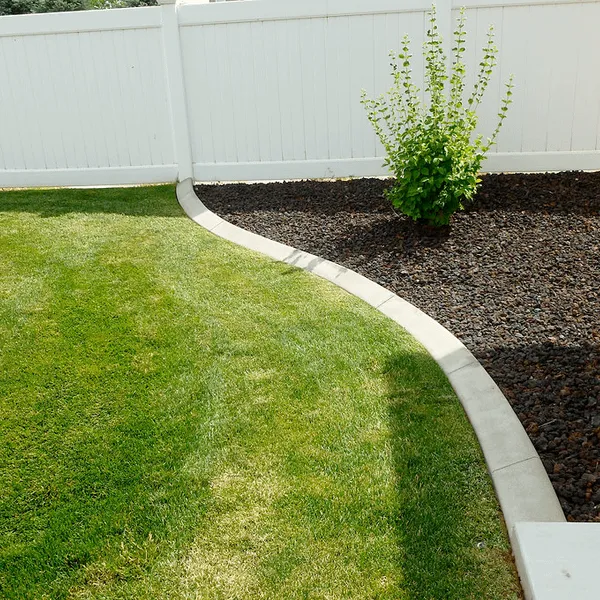
Garden Path Lighting
Post Falls, ID
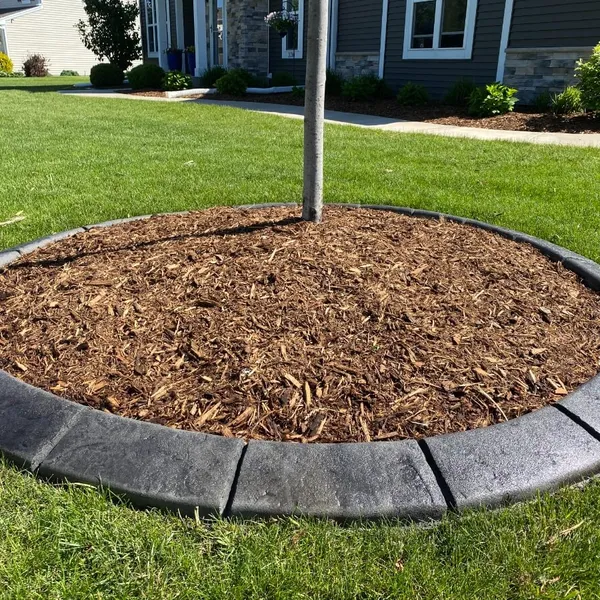
Driveway Accent Lighting
Coeur d'Alene, ID
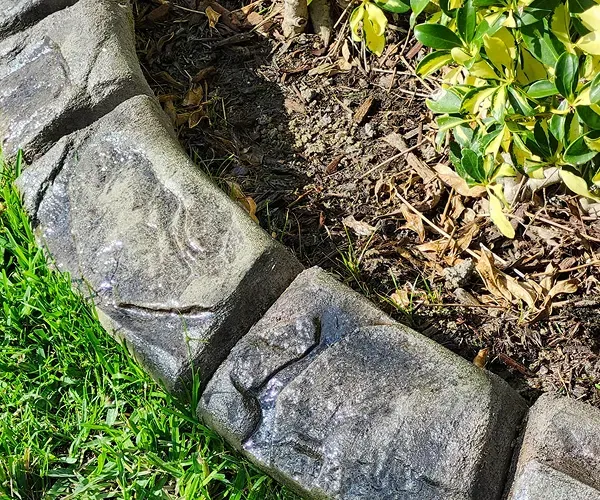
Bed Edge Silhouetting
Hayden, ID
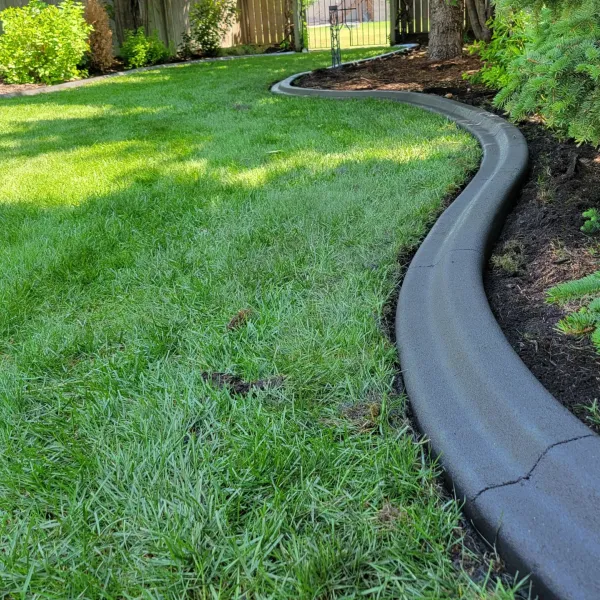
Tree Ring Illumination
Rathdrum, ID
Frequently Asked Questions
Free Estimate