Landscaping project image featuring planting choreography supporting long-term plant performance in Post Falls, Coeur d'Alene, and North Idaho
Curbing / Mower-Edge Profiles

Mower-Edge Profiles

8–10″ Wide Riding Surface Straight & Curved Runs Eliminates String Trimming Full-Yard Mow Strip Systems
Bark Application Restoration Vegetation Management Removal PICP Calibration Energy Savings Water Feature Excavation Revegetation Native Prairie Meadow Restoration Blow-Outs Valve Maintenance Bi-Weekly Lawn Care Mulch Bed Pre-Emergent Weed Treatment Natural Stone Patios Liquid Brine Pre-Treatment Fall Cleanups Hydroseeding Pipe Repair Irrigation Pump Station Maintenance Natural Stone Inlay Slip-and-Fall Mitigation Repair Seasonal Color Rotations Mower-Edge Profiles Concrete Paving Flatwork Pigmented Concrete Bioswale Rain Garden Engineering Security Perimeter Lighting De-Icing Commercial-Grade Curbing Athletic Field Construction Approaches Softscape Installation Full-Scale Landscape Design Utility Trenching Public Works Infrastructure Custom Integrated Lighting Commercial Turf Management Segmental Block Retaining Walls Drainage Smart Controller Integration Backflow Prevention Testing Commercial Architectural Accent Lighting Native Plant Design Dedicated Site Staging Ponds Hard Surface Maintenance Garden Bed Definition Disposal Septic System Site Prep Foundation Excavation Cut/Fill Annual Displays Integrated Pest Management (IPM) Creek Crossings Flow Sensor Install De-Icing Paths Chimneys Continuous Concrete Edging Invasive Species Management Restoration Pressure Regulating Valve Installation Reporting Textured Borders 24/7 Zero-Tolerance Plowing Real-Time Weather Monitoring Porter Services Automated Lighting Control Systems Bollard Light Installation SWPPP Compliance Artificial Grass Custom Irrigation System Design Install Smart Central Control Systems Tree Ring Enclosure HOA Maintenance Optimization Urban Beautification Bio-Retention Cell Maintenance Slope Stabilization Weather Station Relocation ADA Compliance Upgrades Hedge Planting Field Mowing Dust Control Land Clearing Overseeding Vegetated Green Roof Maintenance Sidewalks Hearths High-Volume Pumps Detention Ponds Right-of-Way Clearing Weed Control Redefining Driveway Base Natural Boulder Retaining Walls Park & Playground Construction Structural Retaining Walls Driveway Accents Drip Irrigation Installation Emergency Storm Response Underground Utility Installation Shrub Health Care Bed Preparation Sealing Irrigation System Retrofitting Hedge Trimming Bark Application Restoration Vegetation Management Removal PICP Calibration Energy Savings Water Feature Excavation Revegetation Native Prairie Meadow Restoration Blow-Outs Valve Maintenance Bi-Weekly Lawn Care Mulch Bed Pre-Emergent Weed Treatment Natural Stone Patios Liquid Brine Pre-Treatment Fall Cleanups Hydroseeding Pipe Repair Irrigation Pump Station Maintenance Natural Stone Inlay Slip-and-Fall Mitigation Repair Seasonal Color Rotations Mower-Edge Profiles Concrete Paving Flatwork Pigmented Concrete Bioswale Rain Garden Engineering Security Perimeter Lighting De-Icing Commercial-Grade Curbing Athletic Field Construction Approaches Softscape Installation Full-Scale Landscape Design Utility Trenching Public Works Infrastructure Custom Integrated Lighting Commercial Turf Management Segmental Block Retaining Walls Drainage Smart Controller Integration Backflow Prevention Testing Commercial Architectural Accent Lighting Native Plant Design Dedicated Site Staging Ponds Hard Surface Maintenance Garden Bed Definition Disposal Septic System Site Prep Foundation Excavation Cut/Fill Annual Displays Integrated Pest Management (IPM) Creek Crossings Flow Sensor Install De-Icing Paths Chimneys Continuous Concrete Edging Invasive Species Management Restoration Pressure Regulating Valve Installation Reporting Textured Borders 24/7 Zero-Tolerance Plowing Real-Time Weather Monitoring Porter Services Automated Lighting Control Systems Bollard Light Installation SWPPP Compliance Artificial Grass Custom Irrigation System Design Install Smart Central Control Systems Tree Ring Enclosure HOA Maintenance Optimization Urban Beautification Bio-Retention Cell Maintenance Slope Stabilization Weather Station Relocation ADA Compliance Upgrades Hedge Planting Field Mowing Dust Control Land Clearing Overseeding Vegetated Green Roof Maintenance Sidewalks Hearths High-Volume Pumps Detention Ponds Right-of-Way Clearing Weed Control Redefining Driveway Base Natural Boulder Retaining Walls Park & Playground Construction Structural Retaining Walls Driveway Accents Drip Irrigation Installation Emergency Storm Response Underground Utility Installation Shrub Health Care Bed Preparation Sealing Irrigation System Retrofitting Hedge Trimming Bark Application Restoration Vegetation Management Removal PICP Calibration Energy Savings Water Feature Excavation Revegetation Native Prairie Meadow Restoration Blow-Outs Valve Maintenance Bi-Weekly Lawn Care Mulch Bed Pre-Emergent Weed Treatment Natural Stone Patios Liquid Brine Pre-Treatment Fall Cleanups Hydroseeding Pipe Repair Irrigation Pump Station Maintenance Natural Stone Inlay Slip-and-Fall Mitigation Repair Seasonal Color Rotations Mower-Edge Profiles Concrete Paving Flatwork Pigmented Concrete Bioswale Rain Garden Engineering Security Perimeter Lighting De-Icing Commercial-Grade Curbing Athletic Field Construction Approaches Softscape Installation Full-Scale Landscape Design Utility Trenching Public Works Infrastructure Custom Integrated Lighting Commercial Turf Management Segmental Block Retaining Walls Drainage Smart Controller Integration Backflow Prevention Testing Commercial Architectural Accent Lighting Native Plant Design Dedicated Site Staging Ponds Hard Surface Maintenance Garden Bed Definition Disposal Septic System Site Prep Foundation Excavation Cut/Fill Annual Displays Integrated Pest Management (IPM) Creek Crossings Flow Sensor Install De-Icing Paths Chimneys Continuous Concrete Edging Invasive Species Management Restoration Pressure Regulating Valve Installation Reporting Textured Borders 24/7 Zero-Tolerance Plowing Real-Time Weather Monitoring Porter Services Automated Lighting Control Systems Bollard Light Installation SWPPP Compliance Artificial Grass Custom Irrigation System Design Install Smart Central Control Systems Tree Ring Enclosure HOA Maintenance Optimization Urban Beautification Bio-Retention Cell Maintenance Slope Stabilization Weather Station Relocation ADA Compliance Upgrades Hedge Planting Field Mowing Dust Control Land Clearing Overseeding Vegetated Green Roof Maintenance Sidewalks Hearths High-Volume Pumps Detention Ponds Right-of-Way Clearing Weed Control Redefining Driveway Base Natural Boulder Retaining Walls Park & Playground Construction Structural Retaining Walls Driveway Accents Drip Irrigation Installation Emergency Storm Response Underground Utility Installation Shrub Health Care Bed Preparation Sealing Irrigation System Retrofitting Hedge Trimming Bark Application Restoration Vegetation Management Removal PICP Calibration Energy Savings Water Feature Excavation Revegetation Native Prairie Meadow Restoration Blow-Outs Valve Maintenance Bi-Weekly Lawn Care Mulch Bed Pre-Emergent Weed Treatment Natural Stone Patios Liquid Brine Pre-Treatment Fall Cleanups Hydroseeding Pipe Repair Irrigation Pump Station Maintenance Natural Stone Inlay Slip-and-Fall Mitigation Repair Seasonal Color Rotations Mower-Edge Profiles Concrete Paving Flatwork Pigmented Concrete Bioswale Rain Garden Engineering Security Perimeter Lighting De-Icing Commercial-Grade Curbing Athletic Field Construction Approaches Softscape Installation Full-Scale Landscape Design Utility Trenching Public Works Infrastructure Custom Integrated Lighting Commercial Turf Management Segmental Block Retaining Walls Drainage Smart Controller Integration Backflow Prevention Testing Commercial Architectural Accent Lighting Native Plant Design Dedicated Site Staging Ponds Hard Surface Maintenance Garden Bed Definition Disposal Septic System Site Prep Foundation Excavation Cut/Fill Annual Displays Integrated Pest Management (IPM) Creek Crossings Flow Sensor Install De-Icing Paths Chimneys Continuous Concrete Edging Invasive Species Management Restoration Pressure Regulating Valve Installation Reporting Textured Borders 24/7 Zero-Tolerance Plowing Real-Time Weather Monitoring Porter Services Automated Lighting Control Systems Bollard Light Installation SWPPP Compliance Artificial Grass Custom Irrigation System Design Install Smart Central Control Systems Tree Ring Enclosure HOA Maintenance Optimization Urban Beautification Bio-Retention Cell Maintenance Slope Stabilization Weather Station Relocation ADA Compliance Upgrades Hedge Planting Field Mowing Dust Control Land Clearing Overseeding Vegetated Green Roof Maintenance Sidewalks Hearths High-Volume Pumps Detention Ponds Right-of-Way Clearing Weed Control Redefining Driveway Base Natural Boulder Retaining Walls Park & Playground Construction Structural Retaining Walls Driveway Accents Drip Irrigation Installation Emergency Storm Response Underground Utility Installation Shrub Health Care Bed Preparation Sealing Irrigation System Retrofitting Hedge Trimming
Mow-Edge Concrete Curbing

The mower wheel rides the edge. The string trimmer stays in the shed.

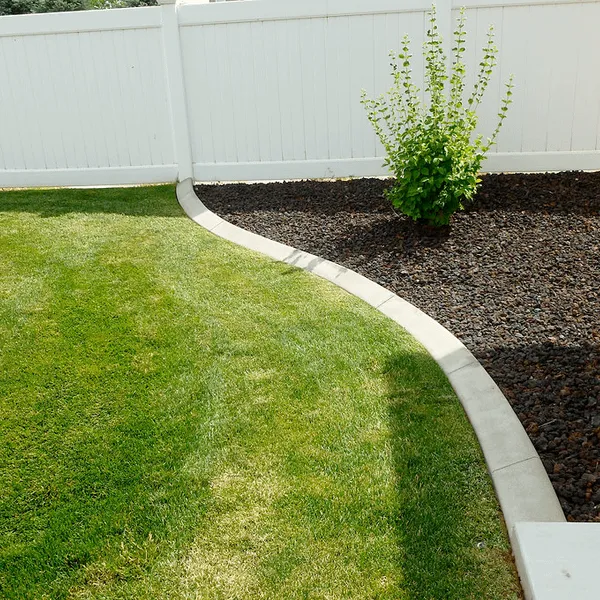
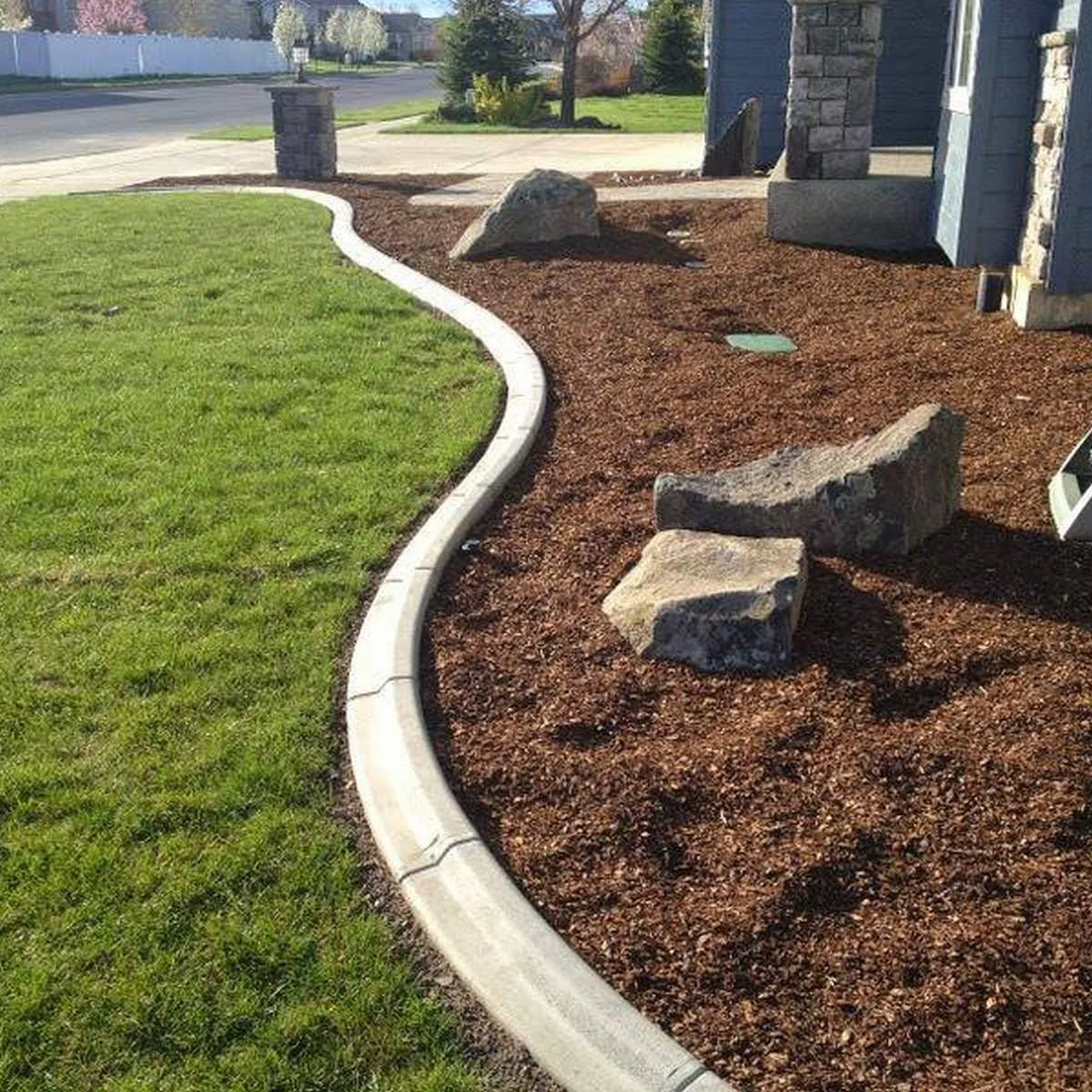
Standard bed-edging curbing defines a boundary. Mower-edge profiles eliminate a task. The LP mow-edge profile is 8–10 inches wide and 2–3 inches tall — sized so a standard residential mower wheel rides along the top while the blade passes clean to the turf edge in the same pass.

We ask what mower you run before we finalize the profile width. Walk-behind, zero-turn, or riding — the profile is sized to your actual equipment, not a generic standard. The goal is a single mowing pass with zero follow-up weed-eating.

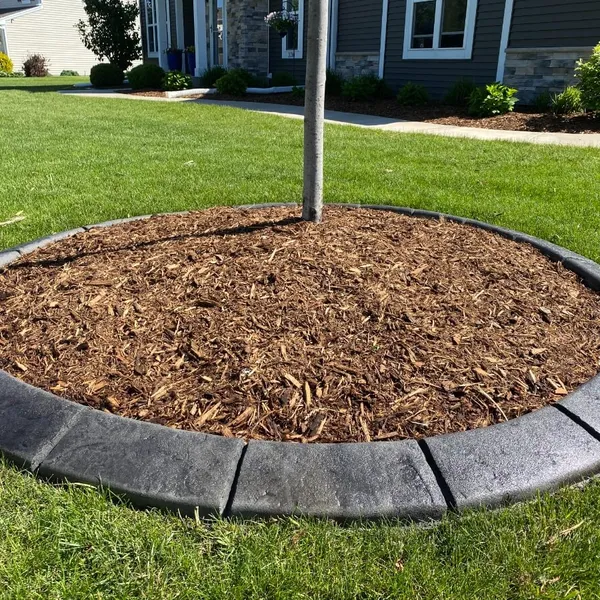
One installation covers your full turf boundary — driveways, bed edges, fence lines, walkways — in straight or curved runs, any color or texture, designed as a coordinated system and installed in a single mobilization.
Landscaping project image featuring planting choreography supporting long-term plant performance in Post Falls, Coeur d'Alene, and North Idaho
Why Mow-Edge Profiles

Four reasons mow strips pay back fast.

Mower Wheel Rides the Top

The LP mower-edge profile is 8–10 inches wide and 2–3 inches tall — wide enough for a standard mower wheel to run along the top edge. The blade passes clean to the border in one pass. No follow-up weed-eating, ever.

Eliminates the Most-Hated Yard Task

String trimming the edge of every bed, walkway, fence line, and driveway is the single most time-consuming lawn maintenance task for North Idaho homeowners. Mower-edge profiles eliminate it categorically.

Straight or Curved Runs

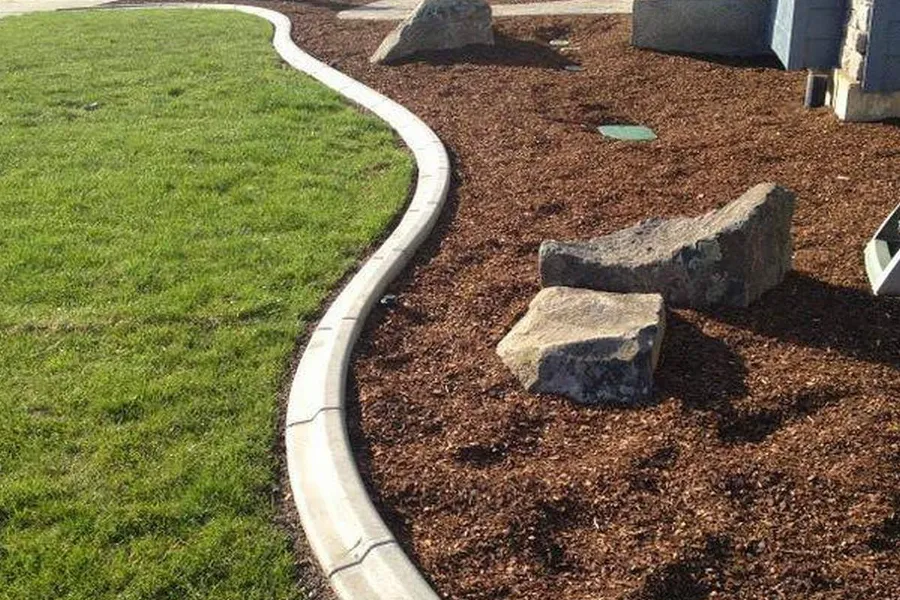
The extrusion machine produces dead-straight runs for driveways and fence lines, and smooth curves for bed edges — all in the same profile. One installation covers your entire turf boundary.

Integrates With Any Surface

Mow-edge profiles work alongside turf, gravel, mulch, bark, decomposed granite, or hardscape — any surface where you need a clean, maintainable boundary.

Customer Reviews

What North Idaho homeowners
say about LP mower-edge curbing.

"LP's mower-edge curbing has saved me hours of string trimming every week. My zero-turn mower rides perfectly on the wide surface. No more edging along the driveway!"
— David L., Post Falls
"The mower strips around our entire yard are a game-changer. No more weed-eater pass, no more uneven edges. LP's attention to the right width for our mower made all the difference."
— Karen W., Coeur d'Alene
Profile Applications

Six applications across every turf boundary in your yard.

A full-yard mow strip system addresses every trim-edge at once. We design the complete layout during your estimate — profile widths, heights, curves, and any grade transitions — and install everything in a single visit with one per-linear-foot price.

01

Driveway Mow Strip

Wide profile running the full length of turf-to-driveway transitions. The mower rides the edge, the string trimmer stays in the shed. One of the highest-ROI installations we do.

02

Fence Line Borders

Full-run mow strip along fence lines and property boundaries eliminates the grass strip that grows up through and alongside fencing — the most tedious trimming task in a standard yard.

03

Bed-to-Turf Transition

Lower profile version for planting bed edges where you want a clean turf-to-mulch boundary the mower can edge in one pass without scalping the bed.

04

Walkway Borders

Mow strip alongside concrete or paver walkways creates a clean trim-free edge on both sides of every walking path in your yard.

05

Slope & Grade Transitions

Mow-edge profiles follow grade changes without interruption, maintaining the wide riding surface even on sloped terrain where string trimming is especially hazardous.

06

Full-Yard Mow Strip Systems

Comprehensive mow strip layout for the entire property — driveways, beds, fence lines, walkways — designed and installed in a single mobilization with a written per-linear-foot estimate.

Quick Facts

Everything you need to know
about mower-edge concrete curbing.

What is mower-edge curbing?

Mower-edge curbing is wide, low-profile concrete border (8-10 inches wide, 2-3 inches tall) designed so mower wheels ride along the top surface. Eliminates string trimming by allowing mower blades to cut clean to the edge in one pass.

Does mower-edge curbing eliminate all trimming?

Nearly all trimming for covered areas. Mower wheel rides the surface, blade cuts to the edge. No follow-up weed-eating needed if profile is correctly sized for your mower. LP confirms equipment specs before installation.

How wide should mower-edge curbing be?

Depends on mower wheel width. Walk-behind mowers: 4-6 inches. Zero-turn/riding mowers: 6-10 inches. LP standard is 8 inches wide, accommodating most residential equipment. We confirm your mower specs before finalizing width.

Cost of mower-edge concrete curbing?

Mower-edge profiles cost $11-18 per linear foot installed in North Idaho. 15-25% more than standard curbing due to wider profile and more concrete. Fastest ROI of any curbing type - saves 15-25 hours of trimming per season.

Can mower strips follow curves?

Yes — extrusion machines produce smooth curves or dead-straight runs. Profile maintains consistent width and riding surface throughout curves. LP stakes full layout before installation to ensure proper radius and flow.

LP mower-edge curbing warranty?

Family-owned LandscapePros warrants mower-edge curbing against cracking and settlement. 4.9-star rated with 127+ reviews. 20+ years of North Idaho concrete curbing experience since 2005. Profile sized for your specific mower equipment.

North Idaho Growing Season

Why mow strips save time
in North Idaho yards.

North Idaho's long growing season — typically May through October — means yards need mowing and trimming every 7–14 days during peak season. For a property with 300–400 linear feet of trimming edge (driveways, beds, fences, walkways), that's 30–45 minutes of weed-eating per mowing cycle, every single week. Over a full season, that's 15–25 hours of the most tedious, noise-intensive yard work a homeowner faces.

A properly designed mow strip system eliminates that task categorically and permanently. LP installs mow strips with the actual mower wheel width in mind — we ask what equipment you use before we finalize the profile width. The result is a border your mower rides on the first pass, leaving nothing for a string trimmer to catch. Most homeowners recoup the installation cost within two full growing seasons in saved time and trimmer line.

8–10″
Profile Width
Standard mow-edge profile wide enough for most residential mower wheels to ride cleanly.
2–3″
Profile Height
Low enough to clear mower decks while still containing mulch and defining the boundary.
15–25 hrs
Trimming Saved
Typical season-hours eliminated per growing season on a standard North Idaho residential property.
~2 Seasons
Payback Period
Most installations return their cost in saved trimming time within two full growing seasons.
Project Gallery

Mow strip installations across Post Falls and CDA.
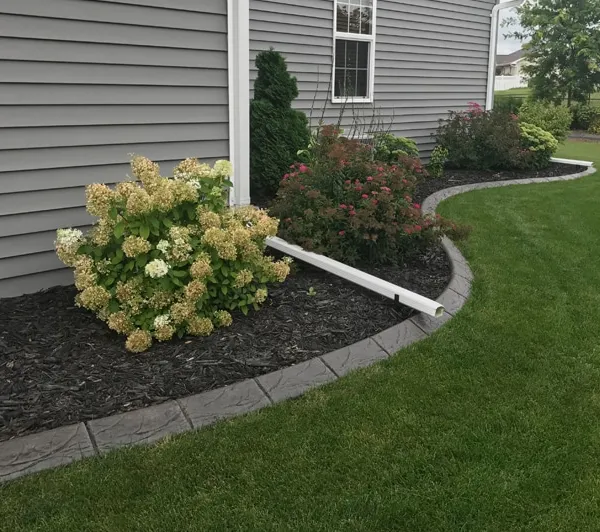
Landscaping project image featuring planting choreography supporting visual rhythm and curb appeal in Post Falls, Coeur d'Alene, and North Idaho, gallery view 3
Post Falls Residence
8" mow strip along driveway boundary
Landscaping project image featuring seasonal color layering supporting visual rhythm and curb appeal in Post Falls, Coeur d'Alene, and North Idaho, gallery view 3
Coeur d'Alene Home
Mower wheel riding clean edge profile
Landscaping project image featuring bed geometry supporting clean transition lines in Post Falls, Coeur d'Alene, and North Idaho, gallery view 3
Hayden Property
Complete fence-line mow strip system
Residential landscaping design and installation work featuring grade blending supporting long-term plant performance in Post Falls and North Idaho from a project gallery
Rathdrum Garden
Curved bed definition with mow strip
Common Questions

Frequently Asked Questions

How wide does a mower-edge profile need to be for my mower?
The right width depends on your mower's drive wheel width. Standard walk-behind mowers typically have 4–6 inch drive wheels; zero-turn mowers and riding mowers range from 6–10 inches. LP's standard mow-edge profile is 8 inches wide, which accommodates the vast majority of residential mowers. We confirm your equipment during the estimate before finalizing the profile width — the last thing we want is a mow strip that's an inch too narrow for your specific machine.
Will a mower-edge profile actually eliminate all string trimming?
Nearly all of it, for the areas covered by the profile. The mower wheel rides the surface and the blade cuts clean to the edge on the mow pass — there's nothing left for a trimmer to catch if the profile is correctly sized and installed at the right height relative to the adjacent turf. The exception is if turf grows horizontally over the top of the curbing — a common issue with stoloniferous grasses in warmer climates. North Idaho's cool-season turf (fescue, bluegrass, ryegrass) rarely creeps this aggressively, but we account for it in the height spec if your turf type is prone to spreading.
How does a mow strip differ from standard concrete curbing in terms of cost?
Mow-edge profiles use more concrete per linear foot (wider, flatter profile) than standard bed-edging curbing, so the cost is typically 15–25% higher per linear foot. However, the functional ROI is higher — mow strips are one of the fastest-payback concrete improvements you can make to a residential property. LP quotes all profile types in the same written estimate so you can compare total cost and decide which approach fits which section of your yard.
Can mow strips be installed along an existing concrete driveway or sidewalk?
Yes, and this is one of the most common mow strip applications. We install the profile parallel to and slightly lower than the existing hardscape surface so there's no lip that a mower deck catches. The specific height relationship between the mow strip and existing concrete is confirmed on-site during the estimate. Where the existing concrete has settled unevenly, we may recommend a small concrete repair first to ensure a consistent ride height across the full run.

Free Estimate

Ready to eliminate string trimming permanently?

Coeur d'Alene Post Falls Hayden Rathdrum Spirit Lake Dalton Gardens Athol Moscow Genesee Troy Potlatch Deary Sandpoint Ponderay Priest River Dover Kootenai Kellogg Pinehurst Osburn Wallace Smelterville St. Maries Plummer Coeur d'Alene Post Falls Hayden Rathdrum Spirit Lake Dalton Gardens Athol Moscow Genesee Troy Potlatch Deary Sandpoint Ponderay Priest River Dover Kootenai Kellogg Pinehurst Osburn Wallace Smelterville St. Maries Plummer Coeur d'Alene Post Falls Hayden Rathdrum Spirit Lake Dalton Gardens Athol Moscow Genesee Troy Potlatch Deary Sandpoint Ponderay Priest River Dover Kootenai Kellogg Pinehurst Osburn Wallace Smelterville St. Maries Plummer Coeur d'Alene Post Falls Hayden Rathdrum Spirit Lake Dalton Gardens Athol Moscow Genesee Troy Potlatch Deary Sandpoint Ponderay Priest River Dover Kootenai Kellogg Pinehurst Osburn Wallace Smelterville St. Maries Plummer
Call Now Book Free Estimate