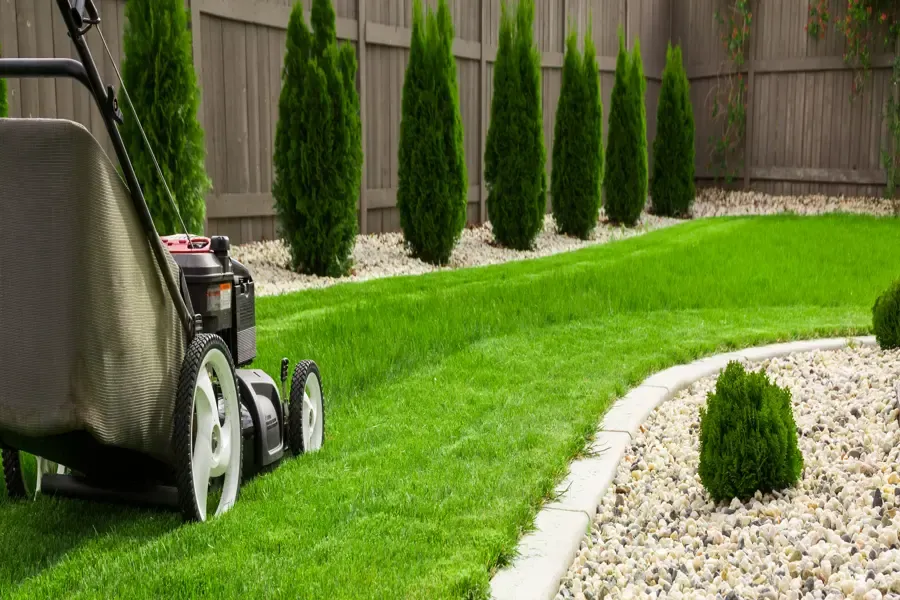
North Idaho landscaping guide and educational resource featuring seasonal timing context supporting stronger maintenance habits in Post Falls, Coeur d'Alene, and North Idaho
May – June · Growing Season Setup

Mow at 3–3.5 inches to shade out weed seeds

The single most effective, free weed-control measure in your turf arsenal is mowing height. Taller grass shades the soil surface, preventing weed seed germination — and it's more drought-tolerant.

Why This Matters in North Idaho

The golf-course look (1.5–2 inch mowing) is a disaster for North Idaho lawns. Cool-season grasses scalped short in Post Falls summers will sunburn, thin out under drought stress, and fill with crabgrass and spurge within two seasons.

Step-by-Step

  1. 1

    Set your mower height to 3–3.5 inches now

    Use a ruler to verify. Most homeowners are mowing at 2–2.5 inches — lower than they realize. Adjust the deck height before the next mow.

  2. 2

    Never remove more than 1/3 of the blade in one pass

    This is the "one-third rule." If your turf is at 5 inches, mow to 3.5 inches — not 2.5. Removing more than 1/3 shocks the plant, causes browning, and diverts energy from roots.

  3. 3

    Mow frequently enough to follow the one-third rule

    In peak growing season (May–June), this may mean mowing every 5–6 days. A consistent schedule beats infrequent deep cuts every time.

  4. 4

    Keep blades sharp

    Dull mower blades tear grass blades rather than cutting cleanly. Torn turf browns at the tips, is more susceptible to disease, and uses more water to recover. Sharpen or replace blades at least once per season.

  5. 5

    Leave clippings on the lawn (unless excessive)

    Grass clippings decompose quickly and return nitrogen to the soil. Only bag if clippings are so long they clump and smother turf — this causes disease.

Pro Tips from 20 Years in the Field
  • Mow in alternating directions each week to prevent turf from leaning one way (which weakens stems) and to reduce soil compaction from wheel tracks.
  • In summer heat (July–August), raise to 4 inches briefly to reduce heat stress. Drop back to 3.5 after heat breaks.
  • Mow when the lawn is dry — wet clippings clump, stick to the mower deck, and can transmit fungal disease across the lawn.

When to Call LandscapePros

Our maintenance crews mow at the correct height with commercial equipment and sharp blades on every visit — guaranteed. If you're tired of adjusting your schedule around mowing days, ask about a maintenance plan.

Family-Owned Since 2005

Let us handle the whole calendar.

From spring cleanup to winter dormancy — we know what North Idaho landscapes need, season by season.

May – June

Mow at 3–3.5 inches to shade out weed seeds: Questions We Get Asked

The golf-course look (1.5–2 inch mowing) is a disaster for North Idaho lawns. Cool-season grasses scalped short in Post Falls summers will sunburn, thin out under drought stress, and fill with crabgrass and spurge within two seasons.

Get Seasonal Tips
Why should I mow at 3 inches instead of 2?
Because height is your best weed control. A three-inch canopy shades the soil surface, which blocks the light weed seeds need to germinate. A two-inch lawn lets light reach the seed bank and turns your turf into a weed nursery. It also means the roots go deeper, the lawn holds water better through July, and the color stays greener through heat.
Should I mow wet grass?
No. Wet mowing clumps and smears clippings, which smother the canopy and invite disease, and it tears the blades rather than cutting them. It also compacts soil and leaves ruts. Wait for a dry window — or mow in the evening after a day of drying, when the grass has had a few hours of sun.
How often should I mow in July in North Idaho?
Every five to seven days at three inches. That is about a 30% growth rate, and staying at a 30% cut per pass keeps the canopy dense. Cutting more than a third at once forces recovery from the crown, which thins the stand exactly when you can least afford it in peak heat.
Is it wasteful to leave grass clippings on the lawn?
No, and it is better for your soil. Short clippings decompose quickly and return nitrogen and organic matter. Only a thick mat of clumped wet clippings smothers the lawn. If your mower cannot mulch, a light topping layer is still fine — just keep it out of your beds and off your hardscape.
Coeur d'Alene Post Falls Hayden Rathdrum Spirit Lake Dalton Gardens Athol Moscow Genesee Troy Potlatch Deary Sandpoint Ponderay Priest River Dover Kootenai Kellogg Pinehurst Osburn Wallace Smelterville St. Maries Plummer Coeur d'Alene Post Falls Hayden Rathdrum Spirit Lake Dalton Gardens Athol Moscow Genesee Troy Potlatch Deary Sandpoint Ponderay Priest River Dover Kootenai Kellogg Pinehurst Osburn Wallace Smelterville St. Maries Plummer Coeur d'Alene Post Falls Hayden Rathdrum Spirit Lake Dalton Gardens Athol Moscow Genesee Troy Potlatch Deary Sandpoint Ponderay Priest River Dover Kootenai Kellogg Pinehurst Osburn Wallace Smelterville St. Maries Plummer Coeur d'Alene Post Falls Hayden Rathdrum Spirit Lake Dalton Gardens Athol Moscow Genesee Troy Potlatch Deary Sandpoint Ponderay Priest River Dover Kootenai Kellogg Pinehurst Osburn Wallace Smelterville St. Maries Plummer
Call Now Book Free Estimate